A green triangle on a Canadian safety boot means the sole resists punctures and the toe cap is Grade 1, which the Canadian Centre for Occupational Health and Safety (CCOHS) describes as the mark for heavy industry and construction, where nails and other sharp objects are on the ground. Other shapes and colours on the CSA label cover other hazards, and a boot only protects against what its label shows.
What do the CSA triangles and rectangles mean?
CCOHS and the safety supplier Levitt-Safety publish the same core list: a triangle means the sole resists punctures, a rectangle means it does not.
- Green triangle: puncture-resistant sole with a Grade 1 toe cap, for heavy industry and construction.
- Yellow triangle: puncture-resistant sole with a Grade 2 toe cap, for light industrial work.
- Blue rectangle: Grade 1 toe cap with no puncture-resistant sole.
- Grey rectangle: Grade 2 toe cap with no puncture-resistant sole.
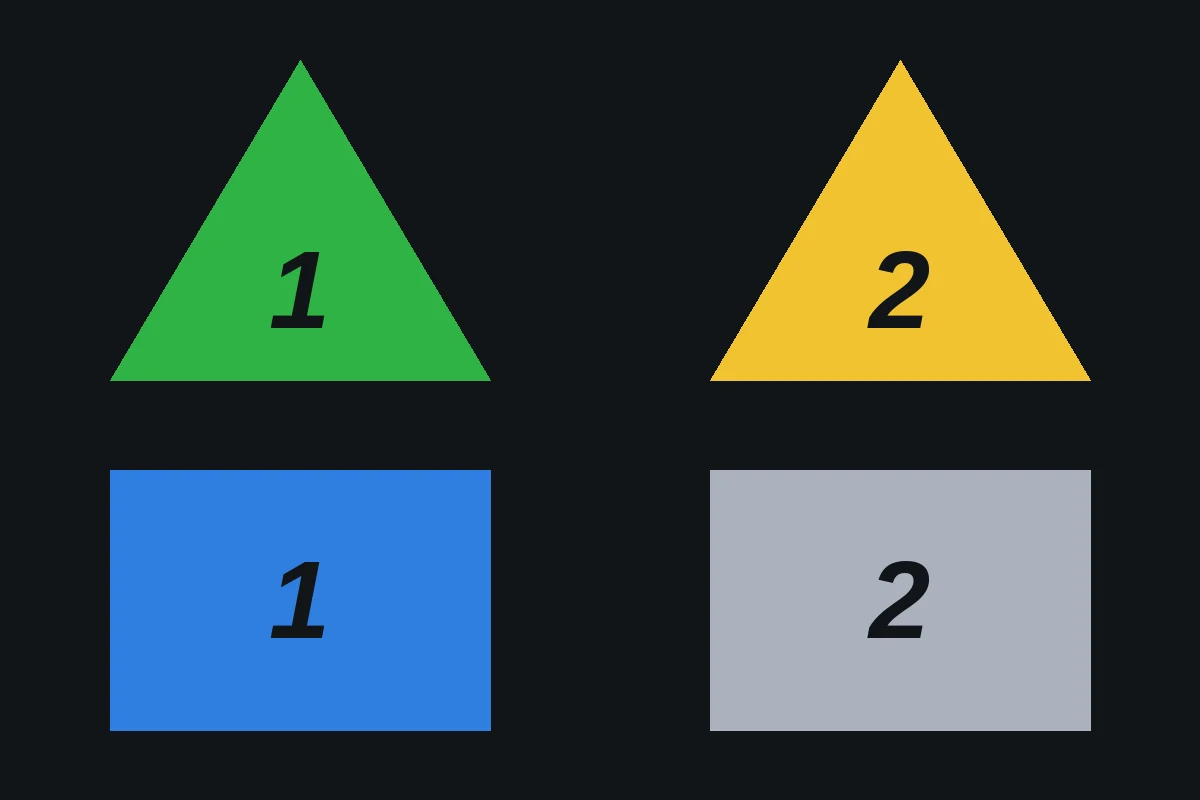 Triangles mark a puncture-resistant sole and rectangles do not. The number inside is the toe cap grade, 1 or 2, as listed by CCOHS and Levitt-Safety.
Kodiak, which sells work boots, puts figures on the green triangle in its icon guide: a Grade 1 toe withstands impacts up to 25 joules, and sole puncture resistance is not less than 1,200 newtons. None of the three sources gives a matching figure for Grade 2, so treat Grade 2 as the lighter option without a number to compare.
Which marks matter for electrical, static and chainsaw work?
A white rectangle with an orange omega means electric shock resistance. CCOHS warns that this resistance deteriorates with wear and in a wet environment, and Kodiak says its rated soles are designed to withstand 18,000 volts with leakage current not exceeding 1 mA.
A yellow rectangle with a black SD marks static-dissipative footwear, and a red mark with a white C marks conductive footwear. CCOHS says neither is for use where contact with live electrical conductors can occur. A dark grey M marks metatarsal protection, and CCOHS says toe protection is required with it. A white label with a tree marks chainsaw protection.
The sources differ on one detail: Levitt-Safety calls the red C mark a triangle and CCOHS calls it a rectangle. Check the label on the boot itself.
Do the CSA marks say anything about winter warmth?
No. CCOHS gives no cold-weather footwear guidance in its fact sheet and only lists extreme heat or cold as a risk to assess, along with wet or oily surfaces. Kodiak shows waterproof and slip resistant as separate icons, and says the slip icon means the outsole was tested under the CSA Z195 slip resisting standard.
For a winter boot, read the CSA label first, then the maker’s own claims on waterproofing, grip and insulation, and ask the maker if a claim is unclear.
How should a safety boot fit and when should it be replaced?
CCOHS suggests trying boots on around midday, when feet have swelled, with the socks or inserts you wear at work. Leave about 12.5 mm of room at the toes, because boots do not stretch to fit, and expect a snug heel and ankle when laced. Check with the maker whether inserts change the protection.
Inspect boots for cracked soles, broken leather and exposed toe caps. CCOHS says to replace boots after a sole penetration or an impact, because the damage may not be visible. It cites CSA Standard Z195-14 (R2023) for protective footwear.
Who it suits
- Framers, demolition and concrete crews: the green triangle is the mark CCOHS ties to nails and sharp debris. Check the toe grade and replace boots after a penetration.
- Electricians: the white rectangle with the omega is the shock mark, but CCOHS says wet conditions and wear weaken it, so treat it as backup protection and check the boots often.
- Landscapers and forestry workers: look for the chainsaw label if you run a saw, and check the winter waterproofing claims separately.
- DIYers and first time buyers: a blue or grey rectangle may be enough for light work, but a green triangle covers the nail hazard that comes with renovation.
- Crew managers: the label should match the hazards on the site, and your jurisdiction may require a specific standard.
Next step: read the CCOHS safety footwear fact sheet, check the label inside the boots you wear now, and confirm what your province or employer requires.