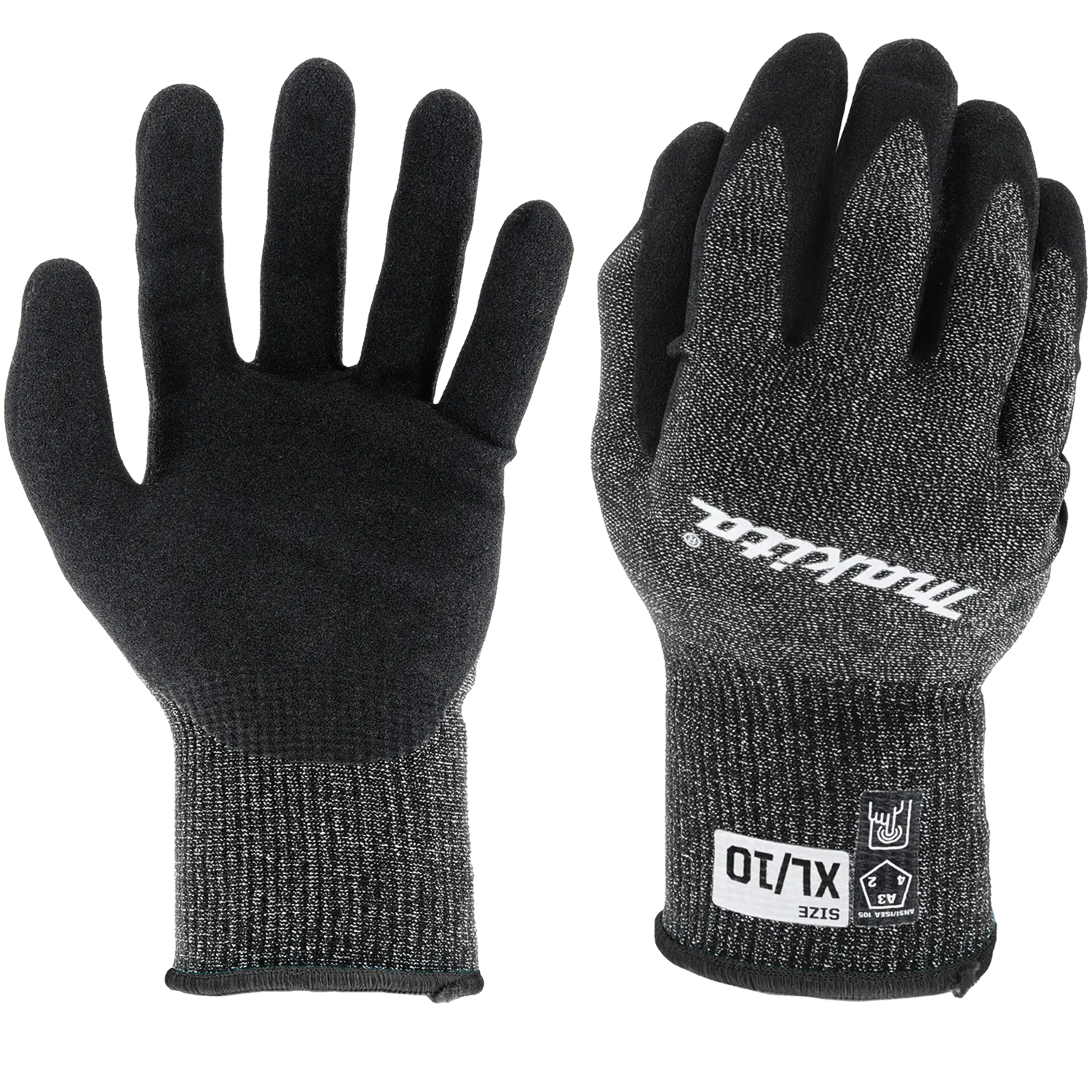
A glove with a cut rating of A3 and one with an impact rating of level 2 protect against two different hazards, and neither number tells you about the other. That is the main point behind the ratings printed on Makita’s new FitKnit gloves, which the company said on October 21, 2026 will be available in November 2026.
What does the cut level A1 to A9 mean?
The cut scale is set by ANSI/ISEA 105 and runs from A1 to A9. The ANSI blog explains that an A1 glove withstands up to 200 grams of force and an A9 glove withstands over 6,000 grams. WC Safety offers rough guidelines: A2 for light assembly, A4 to A5 for sheet metal and glass, and A8 to A9 for the sharpest work. The sixth edition, ANSI/ISEA 105-2024, now covers sleeves as well as gloves and adds a pentagon pictogram that shows cut at the top, abrasion on the left and puncture on the right.
What does impact level 1, 2 or 3 mean?
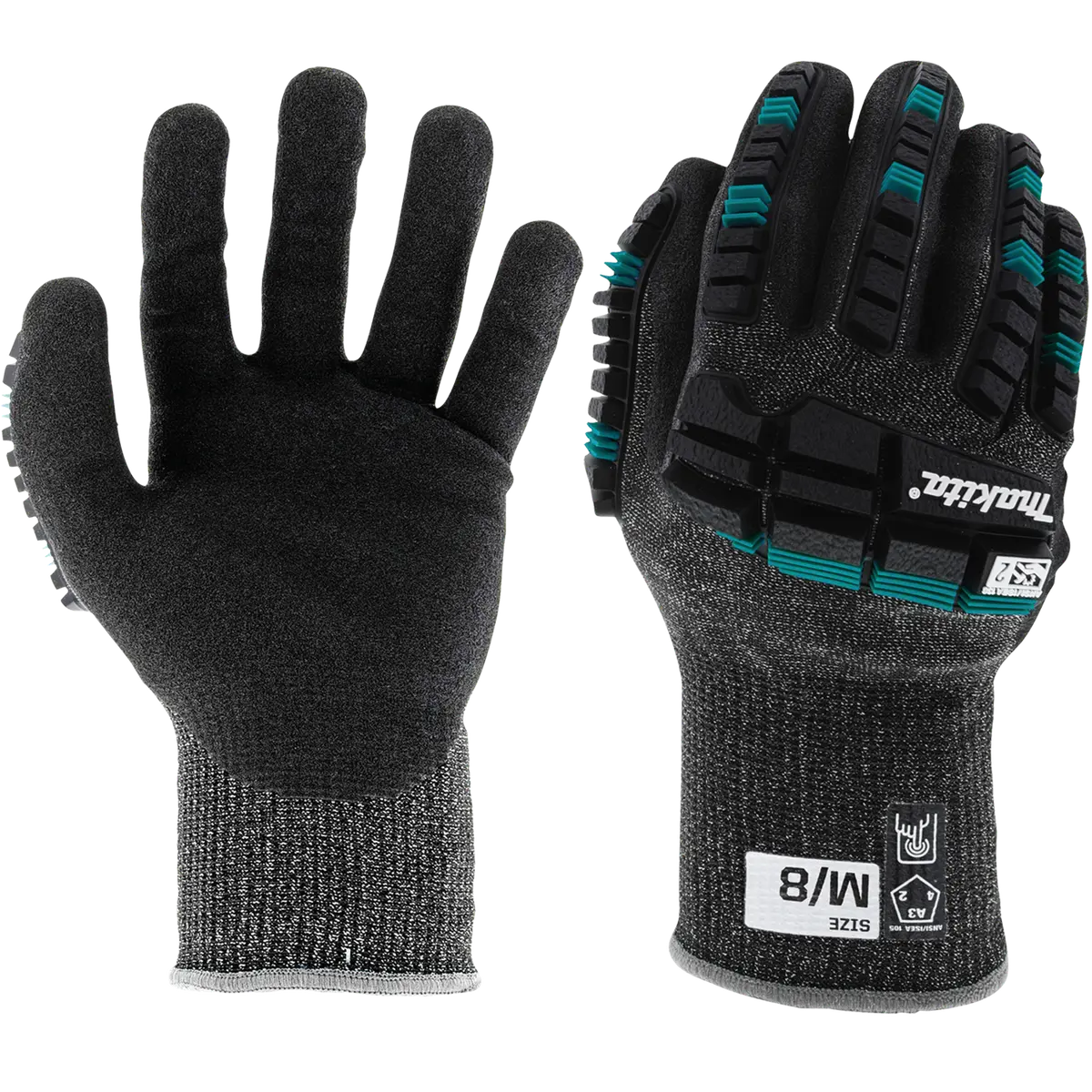
Impact protection is a separate standard, ANSI/ISEA 138, and it covers the back of the hand with molded thermoplastic rubber (TPR) guards. According to WC Safety, the level is based on the maximum mean force transmitted through the guards: level 1 allows up to 9 kN, level 2 up to 6.5 kN and level 3 up to 4 kN. Lower transmitted force is better.
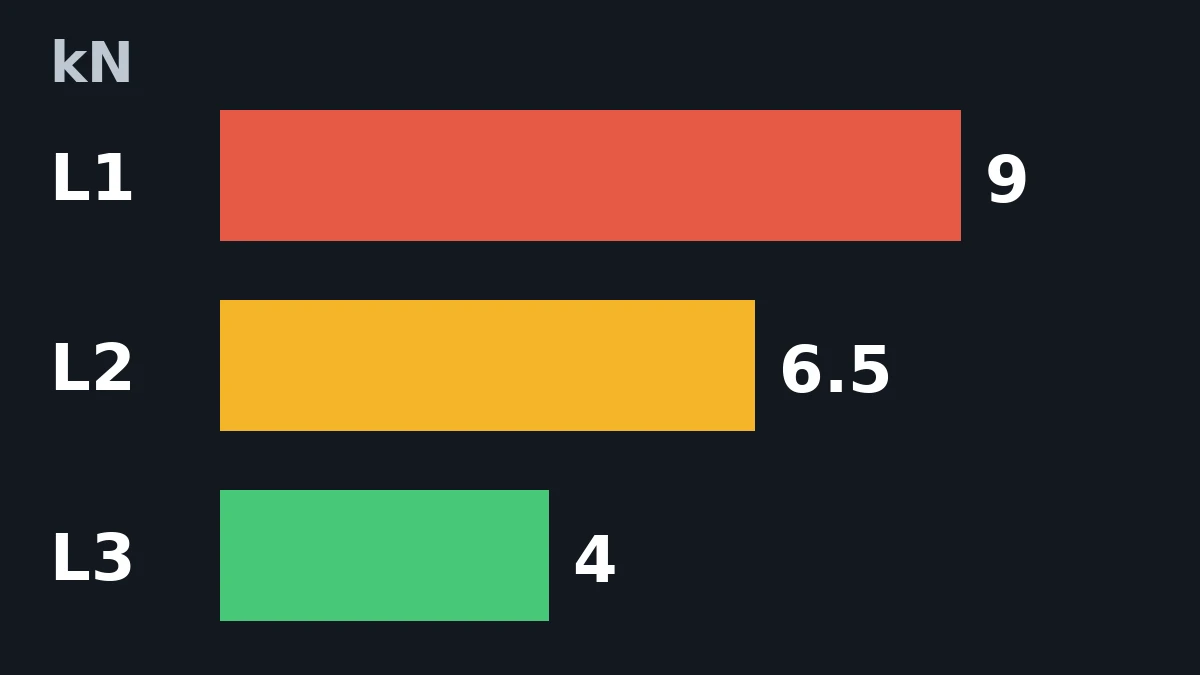 Maximum transmitted force in kN for impact levels 1, 2 and 3. A shorter bar means less force reaches the hand.
How do the Makita gloves read on paper?
Makita lists the Advanced FitKnit Cut Level 3 gloves (T-07951) at ANSI A3 cut, puncture level 2 and abrasion level 4, with a 15-gauge seamless knit, a nitrile palm and touchscreen compatibility. The demolition version (T-08040) keeps the A3 cut rating and adds ANSI/ISEA impact level 2 with up to 20% more TPR, sold as a 6-pack of pairs. The October 21 release also lists a Cut Level 5 glove and Cut Level 3 arm sleeves, 15g, with ANSI A3 cut protection. Makita gave no prices.
Who it suits
- Framers and demolition crews: look for a separate impact rating, because a cut rating alone says nothing about knuckle protection.
- Sheet metal and glass handlers: WC Safety points to A4 to A5 for that work, so A3 may be too low.
- Landscapers and equipment operators: Makita names these uses for the gloves, and the sleeves add forearm cover.
- DIYers: A3 with a coated palm suits general repair, but check the size and fit before ordering.
What to check before you buy
Read the pictogram on the glove, confirm the cut and impact levels separately, and check the retailer listing for Canadian availability and price, which Makita has not announced.