The torque number on a cordless drill or impact driver is a peak lab figure, and Power Tools Insider says sustained working torque is typically 30-50% lower than the maximum. That one fact changes how you should read every spec sheet, and it is why a bigger number on the box does not settle which tool to buy.
What do in-lbs and ft-lbs mean?
Torque is rotational force, and the two common units are inch-pounds and foot-pounds. Power Tools Insider gives the conversion: divide in-lbs by 12 to get ft-lbs, so 1,200 in-lbs equals 100 ft-lbs. It also lists N·m x 8.85 = in-lbs, which makes 150 N·m equal to 1,328 in-lbs.
How much torque do drills and impact drivers have?
Power Tools Insider reports that most cordless drills deliver 500-1,400 in-lbs of max torque and most cordless impact drivers deliver 1,500-2,400 in-lbs.
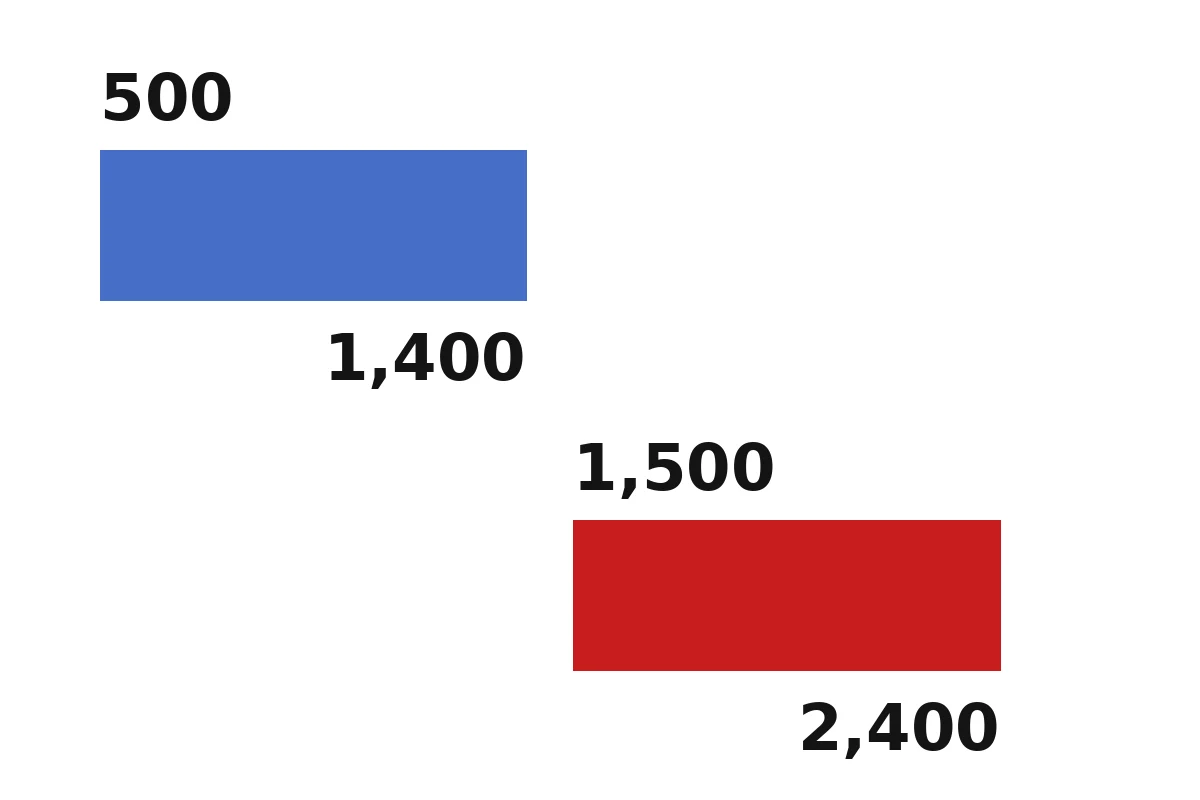
Typical max torque in in-lbs: cordless drills 500 to 1,400 (blue bar), cordless impact drivers 1,500 to 2,400 (red bar). Source: Power Tools Insider.
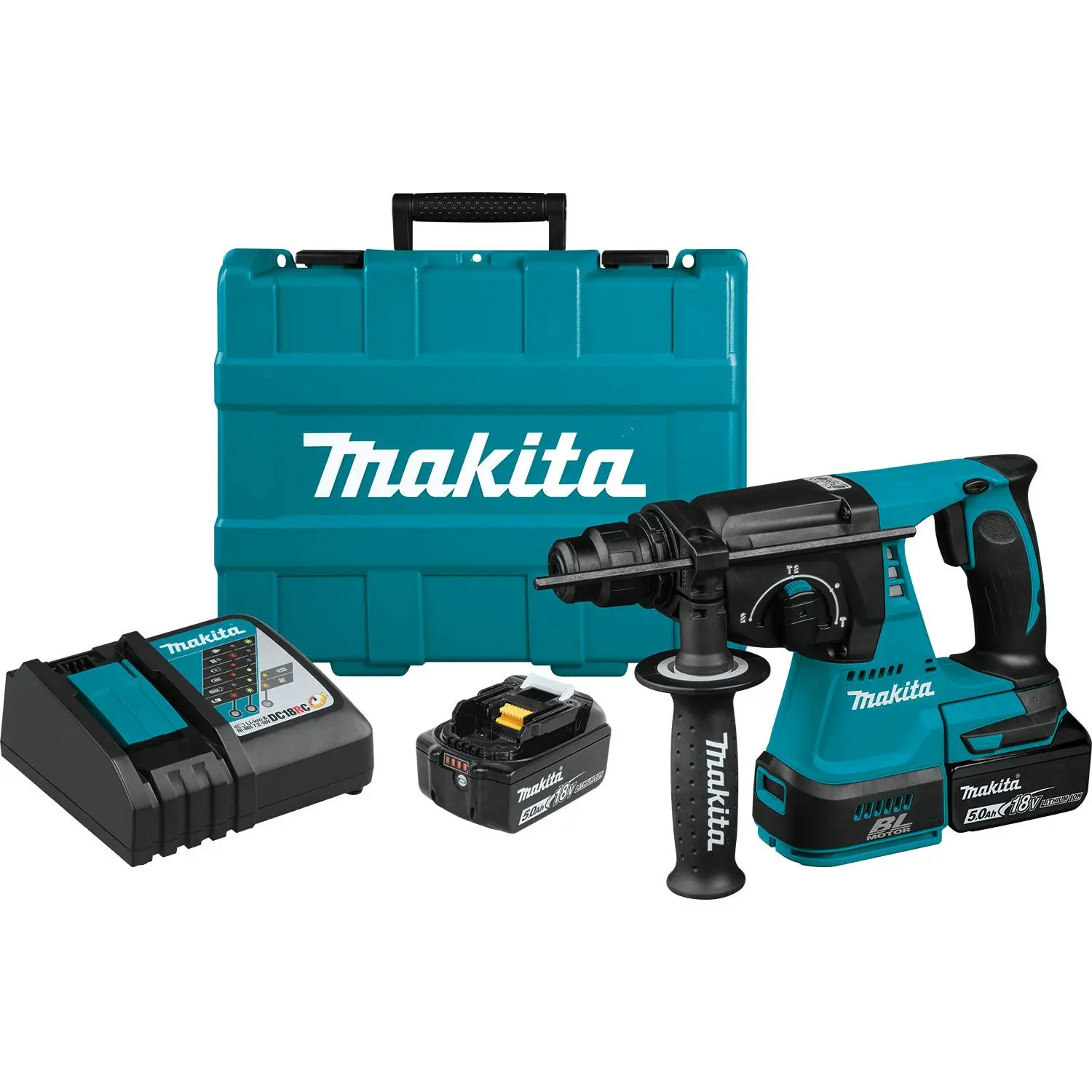
Maker pages show how that looks on real tools:
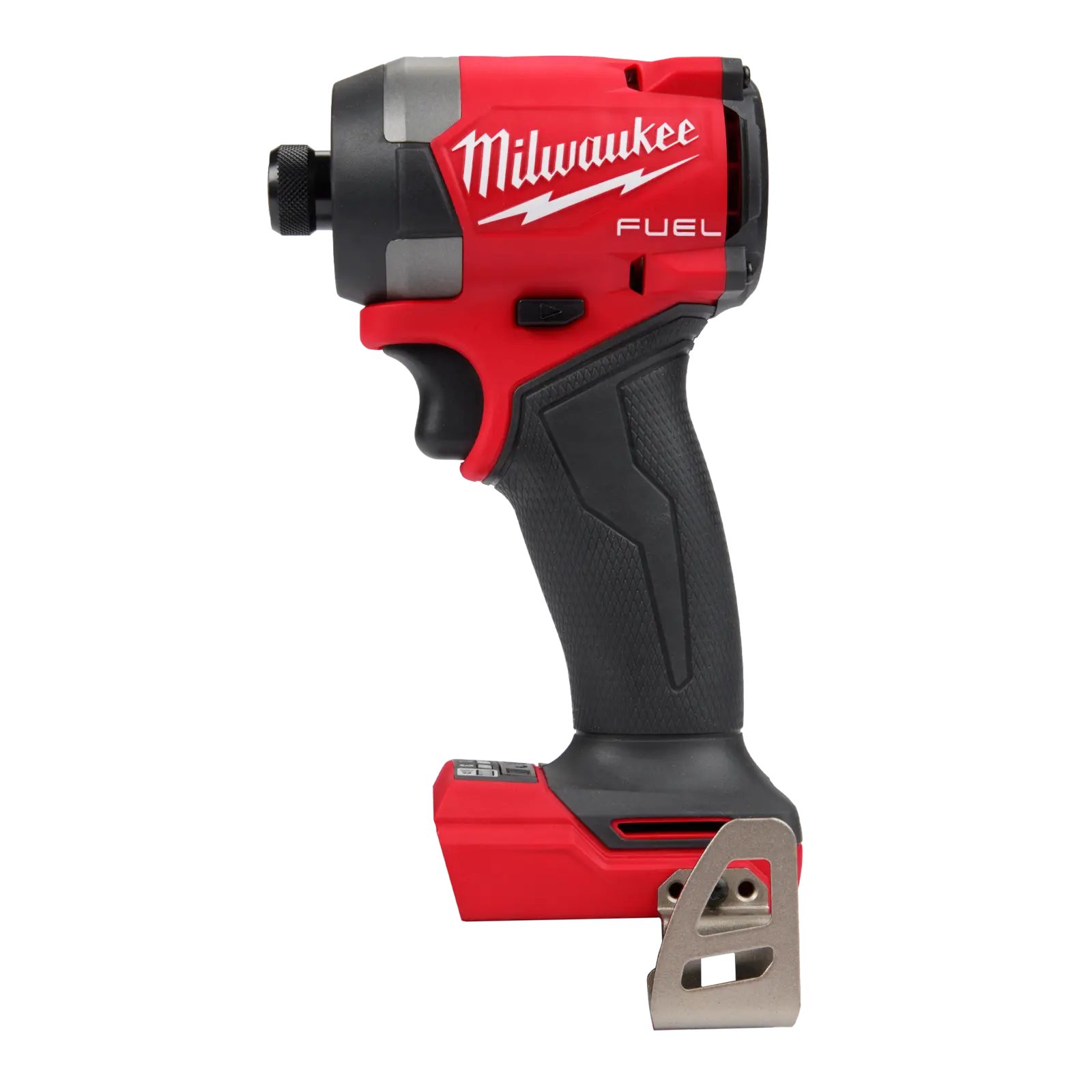
- Milwaukee lists the M18 FUEL 1/4 in. hex impact driver 2953-20 at 2000 in-lbs max torque and 3900 RPM no load, 4.47 in. long and 2.2 lbs.
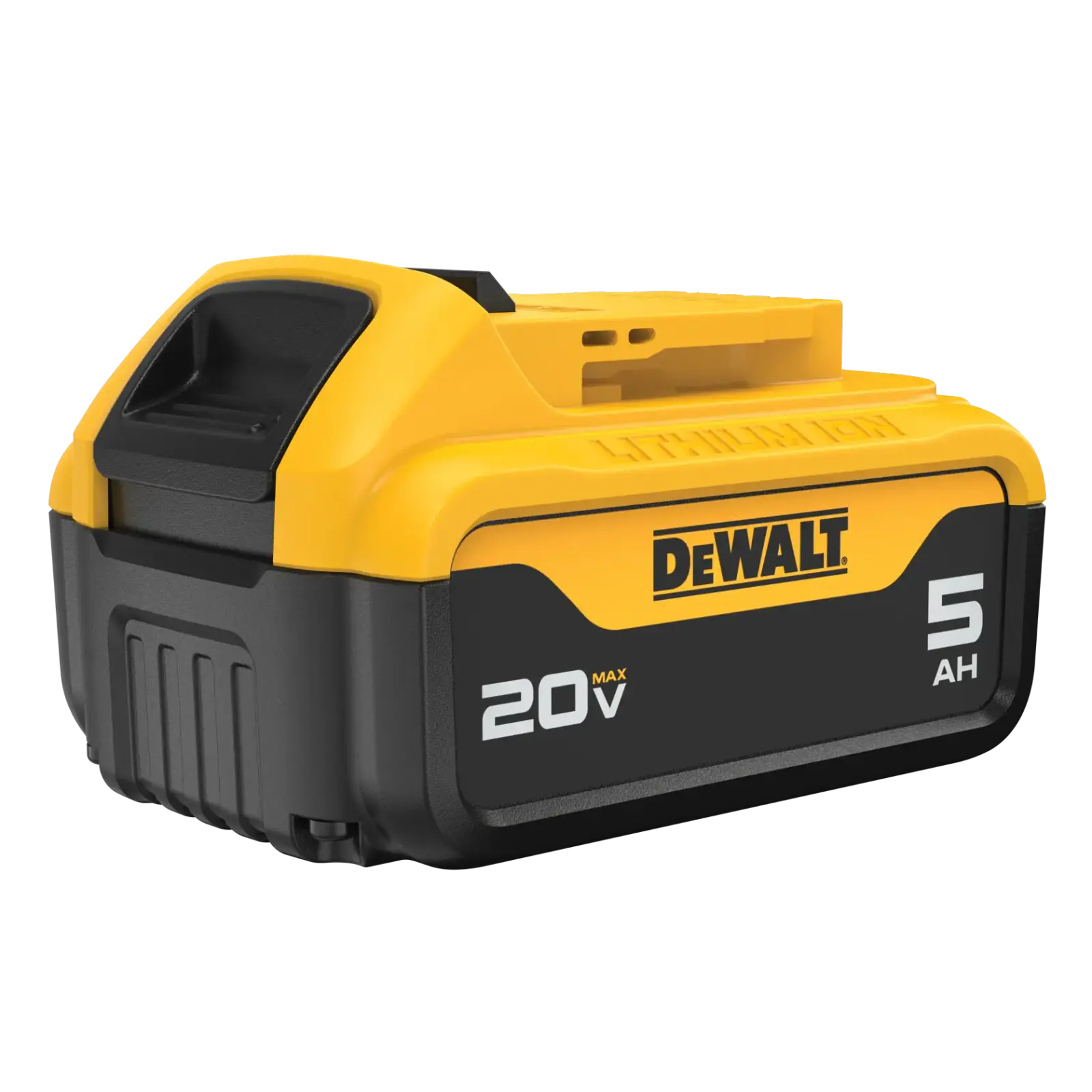
- DEWALT’s DCF887B 20V MAX XR impact driver page lists torque up to 240, 1,500 or 1,825 in-lbs, depending on the speed setting, with RPM up to 1,000, 2,800 or 3,250 and up to 3,600 IPM.
Note that DEWALT quotes three torque figures for three speeds, while Milwaukee quotes one peak. Comparing the two means comparing DEWALT’s top setting to Milwaukee’s single number.
Why does one drill page skip the torque figure?
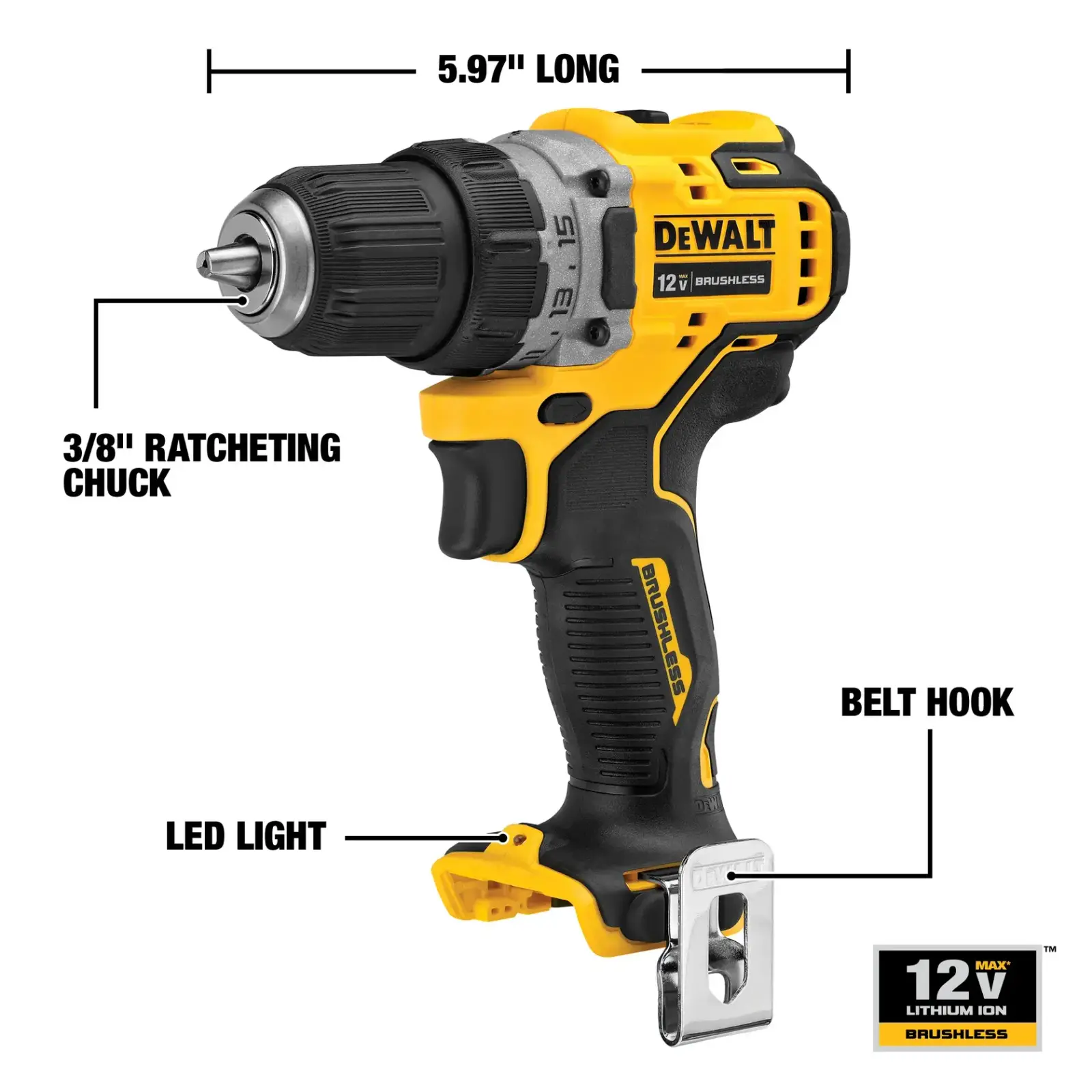
DEWALT Canada’s page for the DCD805B 20V MAX XR 1/2 in. hammer drill/driver shows no max torque. It claims up to 40% more UWO than the DCD796B when both use a DCB205 or DCBP034 battery, and lists two speed ranges, 0-650 and 0-2,000 RPM.
UWO stands for Unit Watts Out, a DEWALT measure of mechanical power at the chuck in watts. Power Tools Insider warns that you can not directly compare UWO across brands, because other makers do not publish it and no standard test exists. DEWALT’s page also gives no absolute wattage, only the percentage against another model.
How much torque do common jobs need?
Power Tools Insider gives these task examples:
| Job | Torque |
|---|---|
| IKEA furniture assembly | 50-100 in-lbs |
| Deck screws in softwood | 200-400 in-lbs |
| Lag bolts | 500-1,000 in-lbs |
| 1 in. holes in hardwood | 600-900 in-lbs |
| Automotive lug nuts | 80-100 ft-lbs (960-1,200 in-lbs) |
| Heavy structural bolting | 150+ ft-lbs (1,800+ in-lbs) |
The same source says any modern 18V or 20V drill has more torque than typical home use needs.
Who it suits
A first time buyer can stop worrying about the peak number. By Power Tools Insider’s reading, a modern 18V or 20V drill covers furniture, deck screws and most home tasks.
A serious DIYer building a deck will meet lag bolts at 500-1,000 in-lbs. Check that the tool’s page quotes a max torque, and remember working torque runs lower than the box number.
A professional tradesperson should compare tools on the same measure. A max torque in in-lbs and a UWO percentage are not interchangeable, and one maker’s three-speed range is not one peak.
Someone already on a battery platform, such as Milwaukee M18 or DEWALT 20V MAX XR, can compare within that brand’s pages first, since each brand states its figures its own way.
A crew buyer ordering for a team should write down which figure each page uses and ask the maker for the missing one before ordering in bulk.
What to do next
Open the spec page of the exact model you are considering and note whether it quotes max torque, UWO or neither. Then compare tools only on the same figure, and check the current Canadian price at the retailer you use. Prices can change at any time.