Choosing between a 12V and an 18V cordless platform is one of the first decisions a tool buyer makes, and the answer depends on the work you do, not on which number is bigger. This guide pulls together the makers’ own spec pages, a September 2026 SlashGear comparison and Pro Tool Reviews’ explainer to show where each size is stronger. Every figure below is attributed to the source that published it, and Torque Digest has not tested any of these tools.
What the maker pages tell you
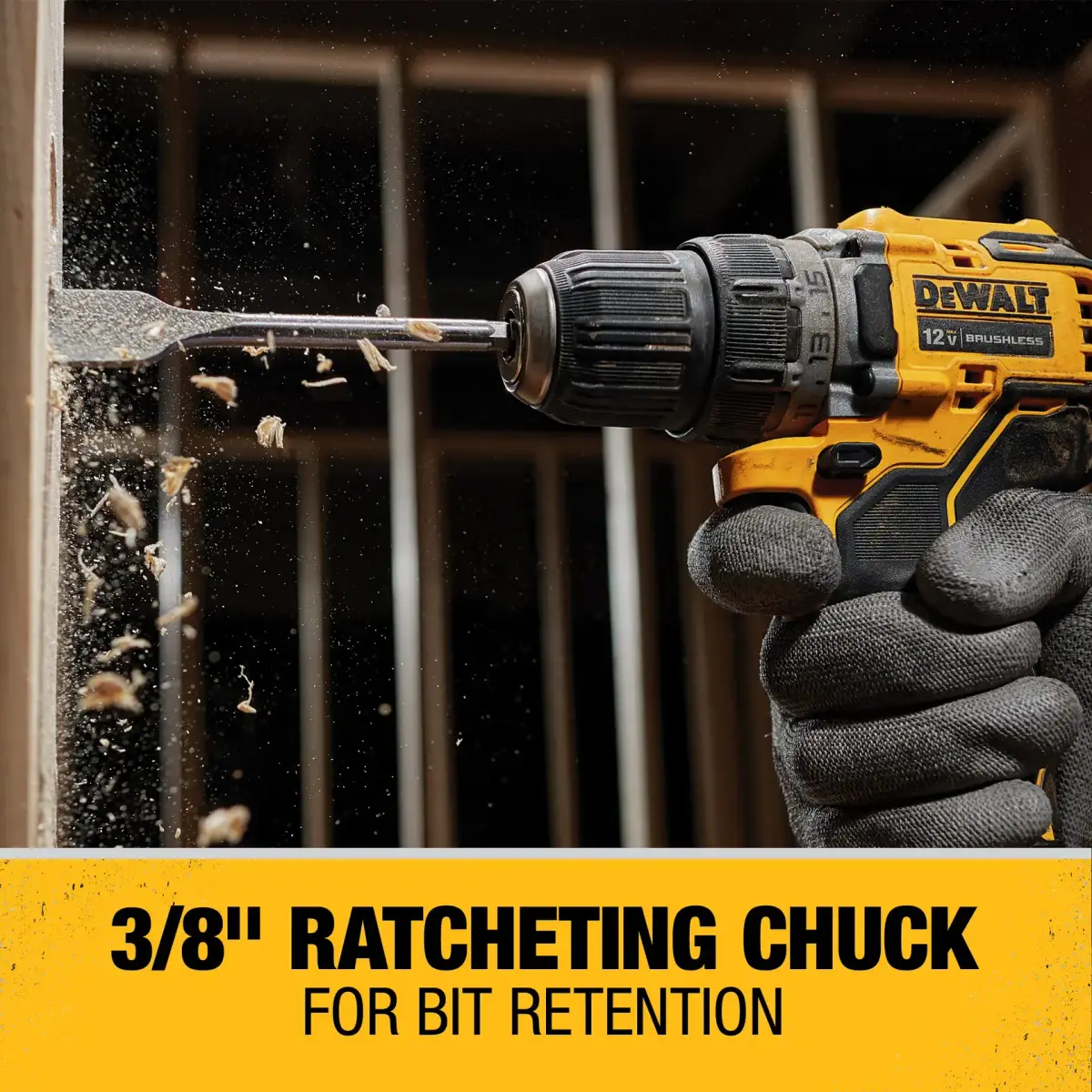
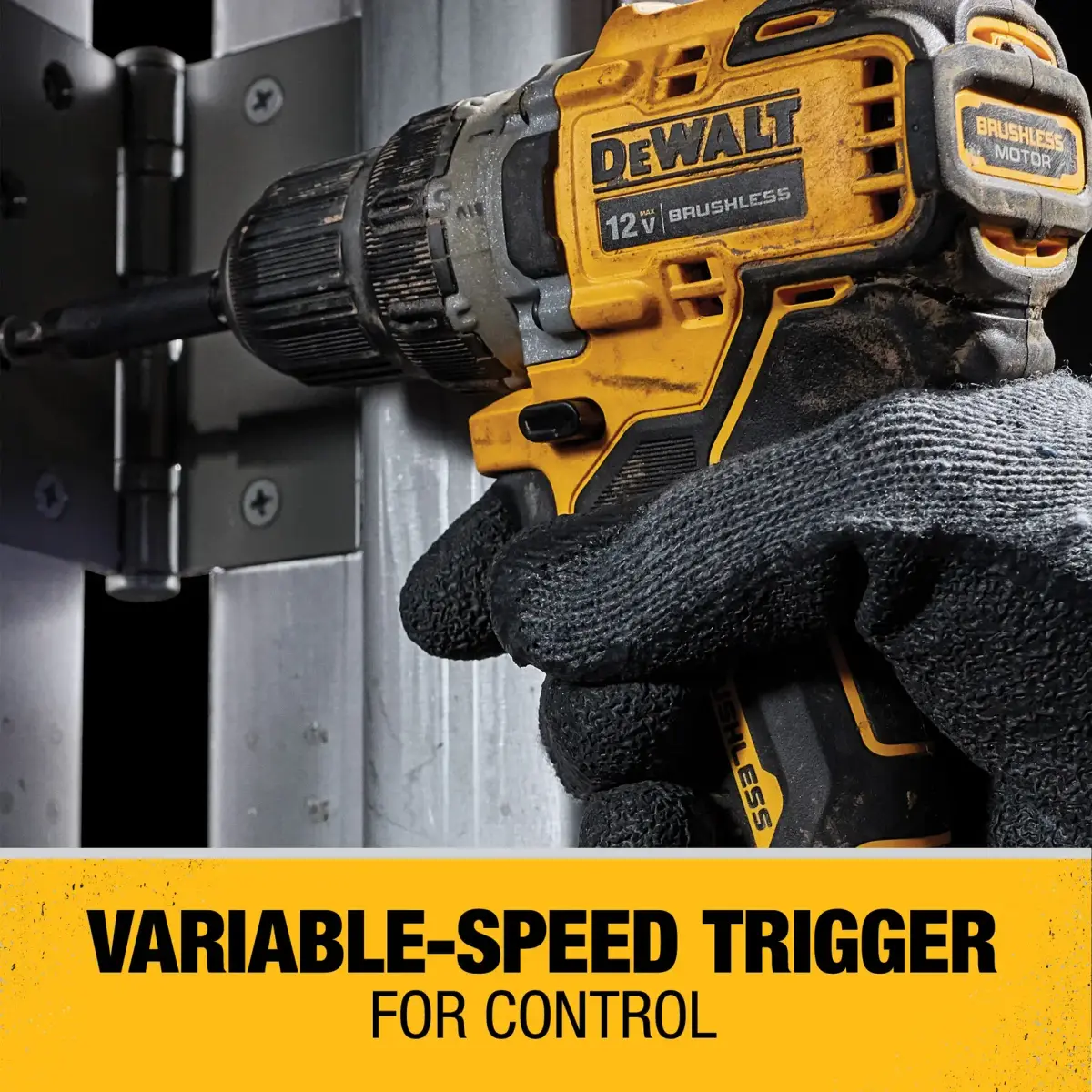
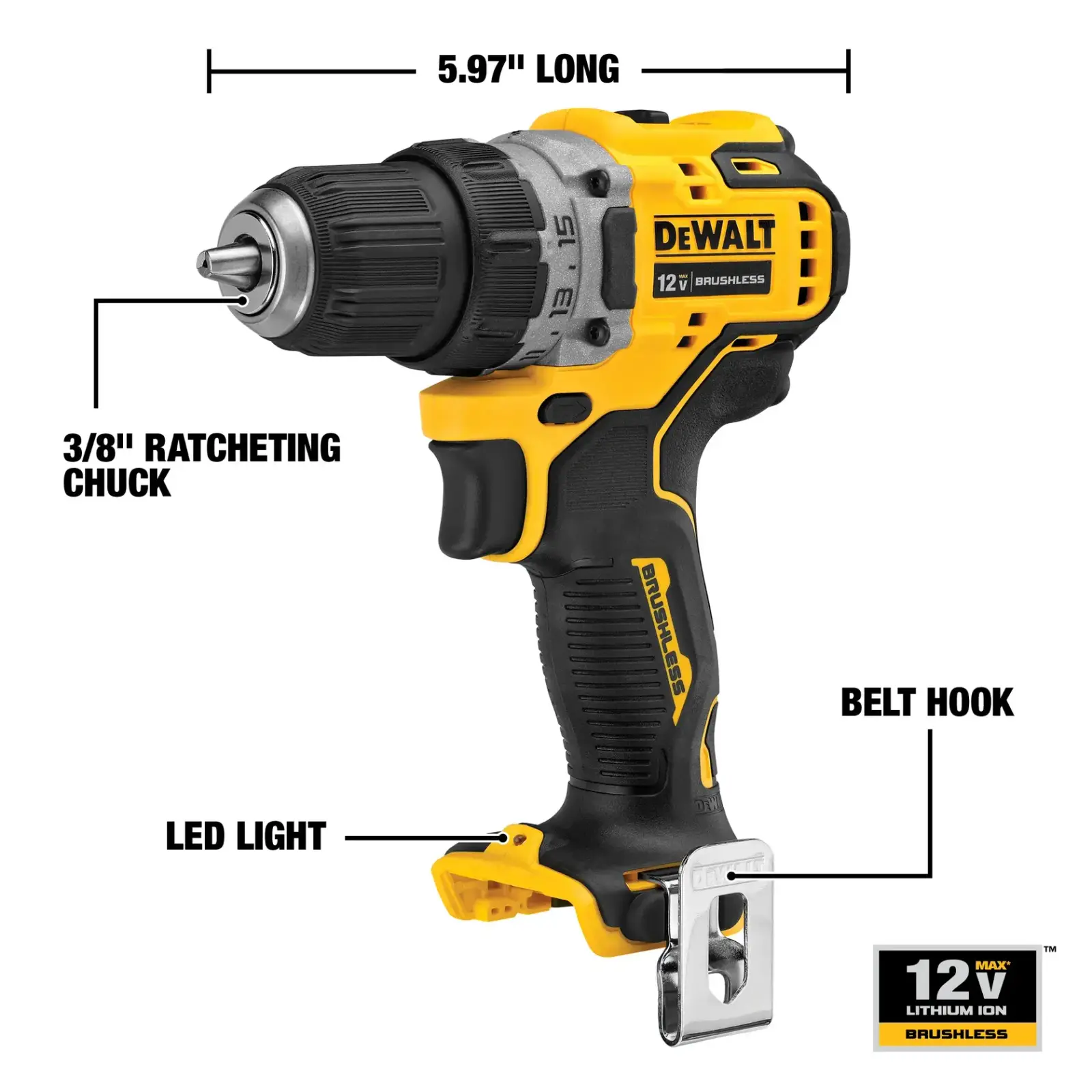
DEWALT’s Canadian product page for the XTREME 12V MAX brushless 3/8 in. drill driver (DCD701B) lists a tool weight of 1.9 lbs and a length of 5.97 in. front to back, with a 3/8 in. ratcheting chuck, a 2-speed transmission and 15 clutch settings. DEWALT also marks that model as discontinued on its site, so treat it as an example of the 12V class rather than a tool to hunt for.
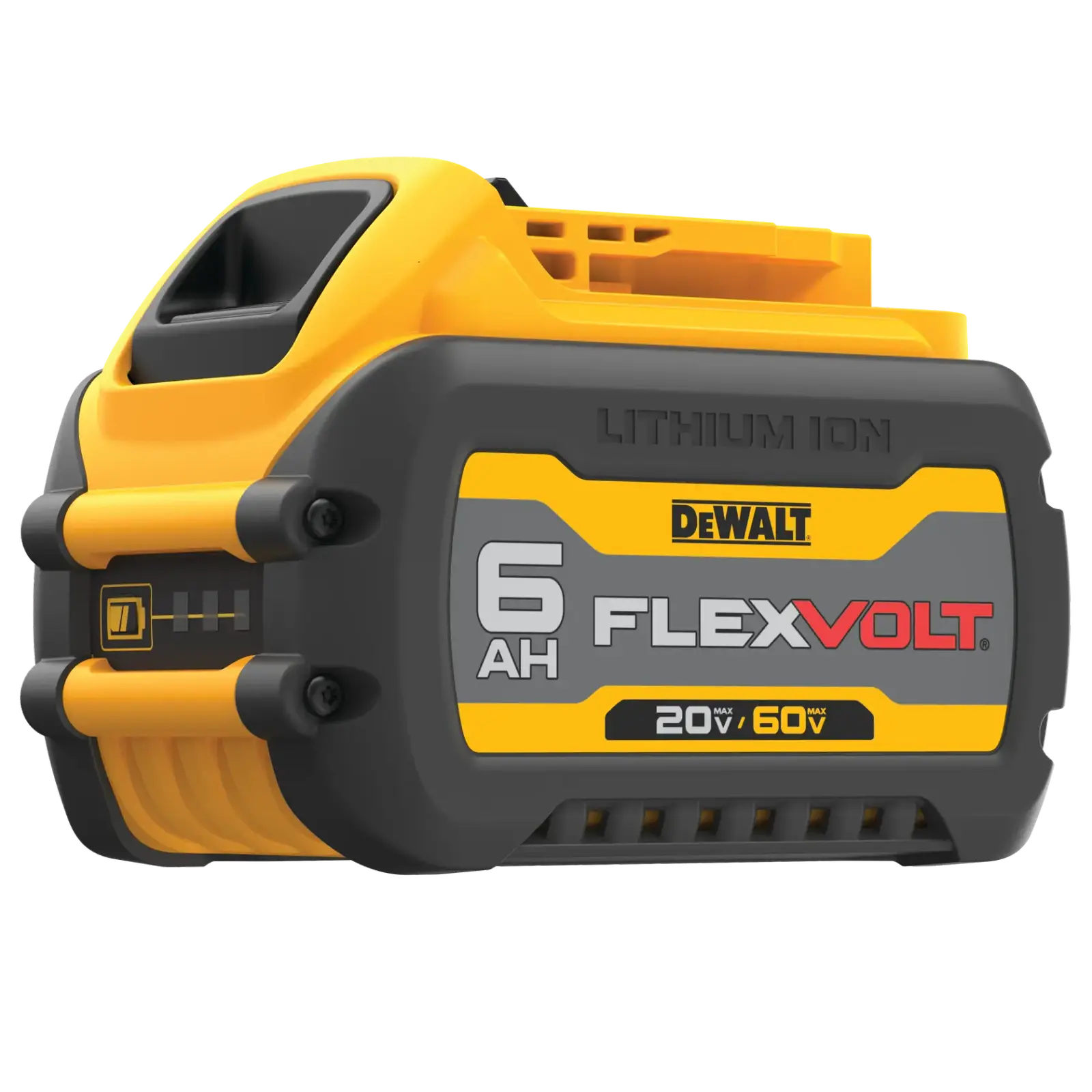
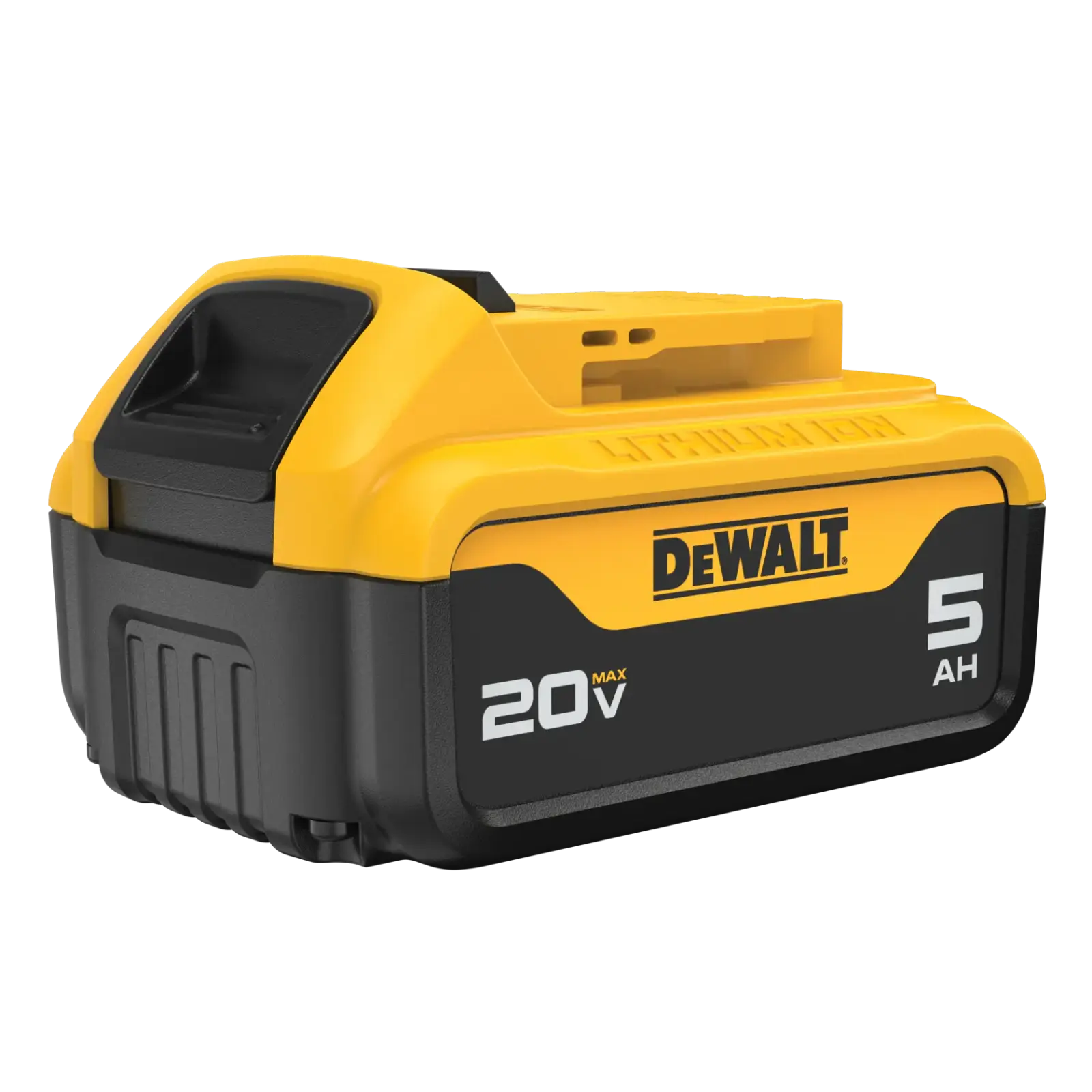
The same maker explains how voltage labels work. For the 12V tool, DEWALT’s footnote says the maximum initial battery voltage, measured without a workload, is 12 volts and the nominal voltage is 10.8. On its 20V MAX range the footnote reads 20 and 60 volts for maximum initial voltage and 18 and 54 nominal. In other words, a “20V MAX” battery and an “18V” battery are the same class of pack, which is why this guide treats 18V and 20V MAX as one size.
What SlashGear reported on weight and price
SlashGear’s comparison, published on September 19, 2026, puts numbers on the difference using Milwaukee tools. It reports that the M18 compact impact driver with a 2.0Ah battery weighs 2.69 pounds, while the M12 Fuel impact driver with a 1.5Ah battery weighs 1.98 pounds, about 11 ounces lighter.
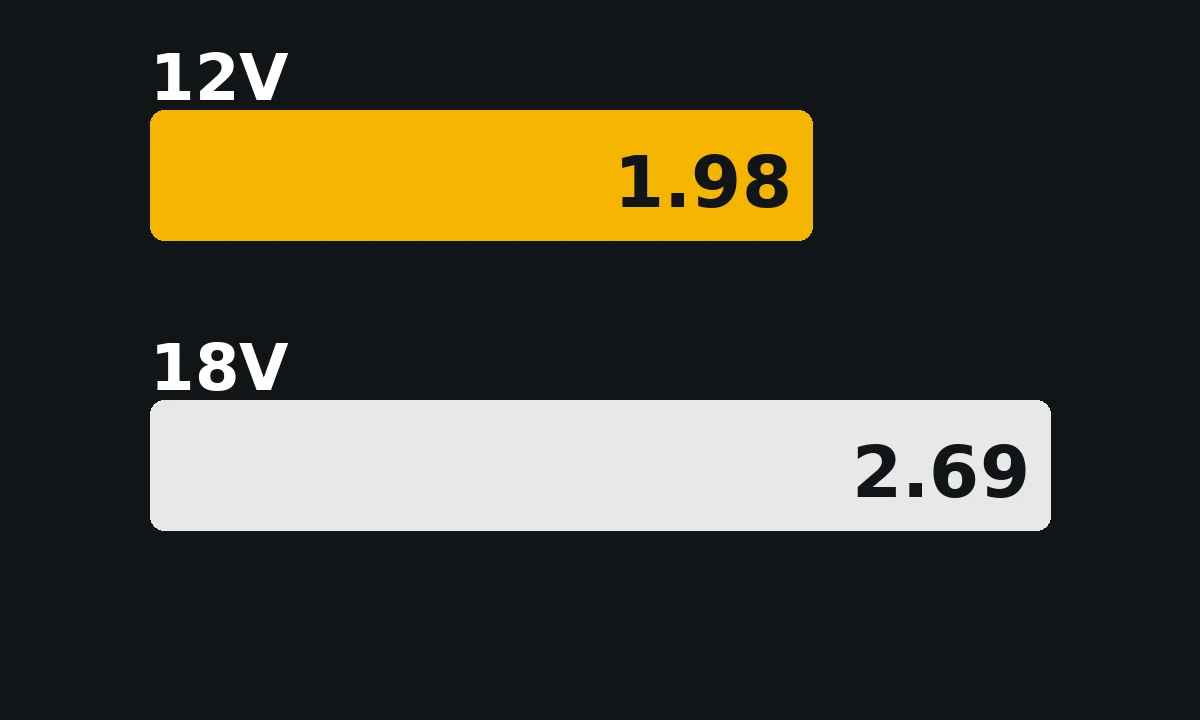
Weight in pounds of the Milwaukee impact drivers SlashGear compared: the 12V M12 Fuel with a 1.5Ah battery against the 18V M18 compact with a 2.0Ah battery. The shorter bar is the lighter tool.
On price, SlashGear lists the M18 Fuel brushless impact driver kit with two 5.0Ah batteries, a charger and a case at $319, and the M12 Fuel kit with a 2.0Ah battery, a charger and a case at $159. SlashGear does not name a currency, and Canadian prices differ, so check current CAD prices at Canadian retailers before you decide. Note too that the kits are not equal: the 18V kit includes two larger batteries.
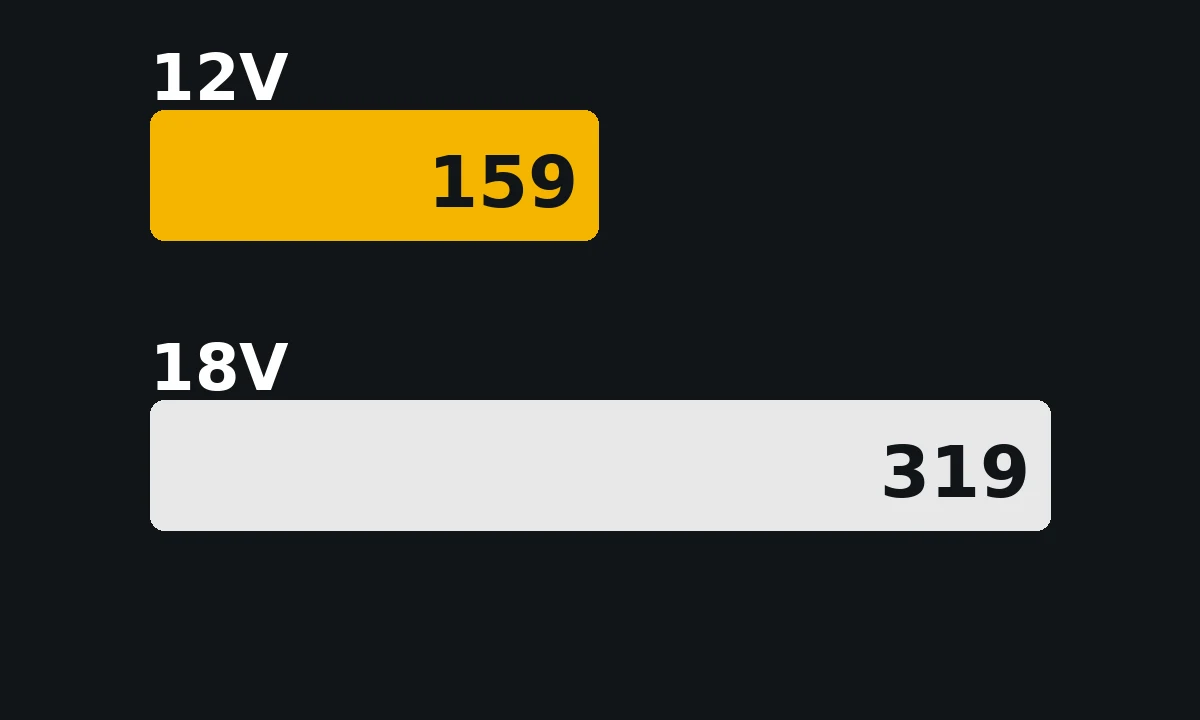
Kit prices as listed by SlashGear for the 12V M12 Fuel kit and the 18V M18 Fuel kit. The 18V kit has two 5.0Ah batteries, the 12V kit one 2.0Ah battery.
Where the sources agree and differ
Pro Tool Reviews argues that modern 12V tools perform much like older 18V tools, that they are lighter and easier to use overhead or in crawlspaces and attics, and that a 12V kit fits in one toolbox or backpack. It notes that a compact 12V pack uses 3 cells against 5 or 6 in a compact 18V pack. It also says 18V batteries run longer on the same task, that packs of 10 Ah and 12 Ah now exist, and that very few pros can do everything on 12V alone, so many use 12V to supplement 18V.
SlashGear reaches a similar split from a different angle: 12V for lighter work such as driving drywall or decking screws, 18V for large holes through lumber or concrete and 6-inch lag bolts. Both outlets agree that 18V costs more and weighs more. Neither publishes a torque or runtime figure in the passages used here, so the choice rests on weight, price and the jobs you do, not on a measured power gap.
Who it suits
- Professional tradesperson: Strong on 18V for production work, and a 12V drill or impact driver is a sensible second tool for overhead, cabinet and electrical jobs. Check that the 12V tool you add is not locked to a second battery system you do not want.
- Serious DIYer: An 18V kit covers decks, framing and large drilling. If most of your work is assembly and light repairs, 12V saves weight. Check the tool list for the platform before you commit.
- First time buyer on a budget: On SlashGear’s figures the 12V kit costs less than the 18V kit, but the 18V kit carries two bigger batteries. Compare like with like, and compare Canadian prices.
- Homeowner: A 12V drill driver handles shelves, furniture and drywall screws and is easier to store. Check what you expect to tackle in the next few years, such as a deck, before settling.
- Someone already on a battery platform: Stay with it where the maker sells the tool you need, since existing batteries are the biggest saving.
- Crew or fleet buyer: Standardising on 18V keeps batteries interchangeable, while a small pool of 12V tools can cover tight spaces. Check that chargers and warranties line up across both.
Before you buy
Read the voltage footnote, confirm whether the price includes a battery and charger, and look up Canadian availability on the maker’s Canadian site. Where a price or specification is not on a source page, treat it as unknown rather than guessing.