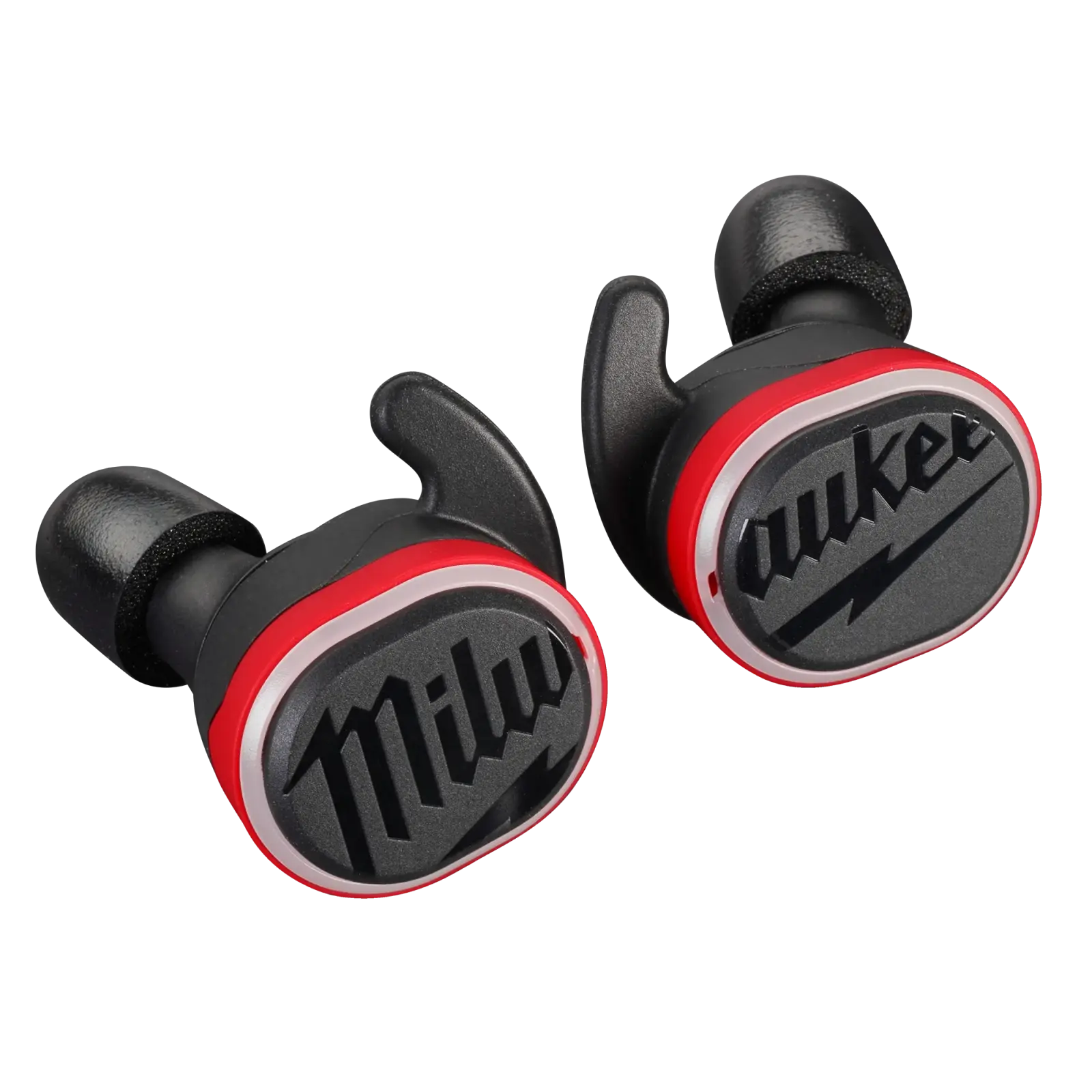
The Milwaukee 2191-21 ear buds and the 3M PELTOR WS ProTac XPI muffs both stream Bluetooth audio on site, but they protect in different ways. The muffs carry a listed NRR of 26 dB and a CSA Class A mark on the 3M Canada page. Milwaukee’s own pages disagree with each other on the ear bud ratings, and neither maker’s page shows a price.
How much noise reduction do they list?
Milwaukee’s product page gives foam tips an NRR of 26 and silicone tips an NRR of 25. A gallery caption on that page and Milwaukee’s press release give NRR 25 for foam and NRR 22 for silicone. Check the manual in the box before you rely on either set of numbers.
The 3M PELTOR WS ProTac XPI headset, model MT15H7AWS6-111, is listed on 3M Canada at NRR 26 dB and CSA A.
The Canadian Centre for Occupational Health and Safety (CCOHS) points out that an NRR is a laboratory rating that must be de-rated for real workplaces. Its example: 96 dBA noise with a 26 NRR earmuff ends at about 81 dBA.
How long do they run on a charge?
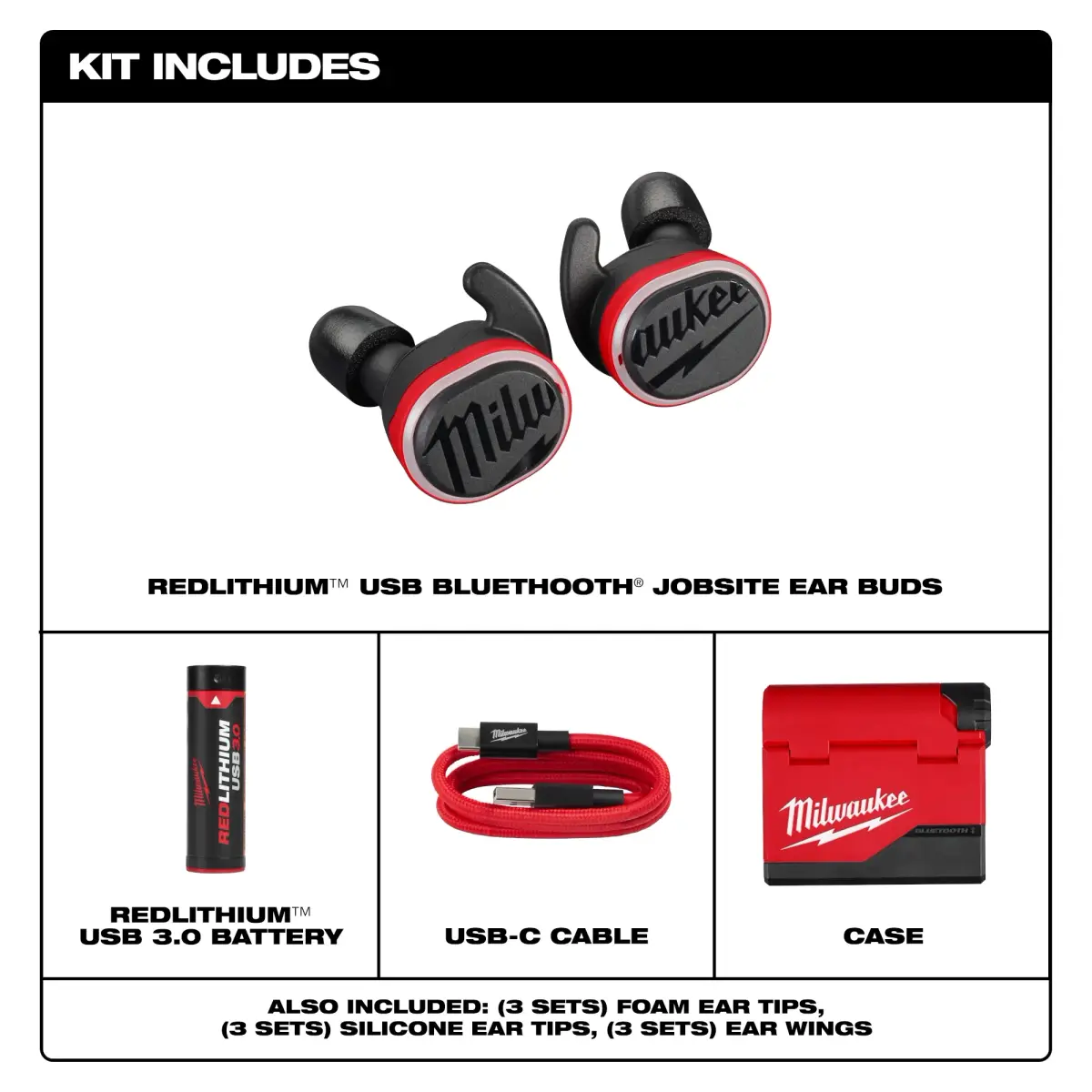
Milwaukee says the ear buds run up to 10 hours on a single charge and up to 70 hours using multiple in-case charges from the 3.0Ah REDLITHIUM USB battery. Bluetooth is version 5.1 with up to 55ft of range.
3M lists 45 hours of battery life from 2 AA batteries, which are included, or rechargeable NiMH packs. The headset connects to up to two devices at once and weighs 13.23 oz (375 g).
Ear buds or muffs: what does CCOHS say?
CCOHS says earplugs are cheaper, more comfortable in hot or humid areas and easier to wear with other PPE, but they should not be used above 105 dBA. Earmuffs vary less in protection between users, are easier to fit and check, and last longer, but they cost more, weigh more and can interfere with safety or prescription glasses.
CCOHS also says hearing protection is needed when noise is close to or above the occupational exposure limit, which is 85 dBA in most jurisdictions, and that music earphones are not substitutes for protectors.
Wearing time matters as much as the rating. CCOHS gives this example for a 25 dB device:

Protection left from a 25 dB device: full, then at most 11 dB after 5 minutes removed in an hour, then 3 dB after 30 minutes removed. Source: CCOHS.
Who it suits
A framer, concrete or demolition worker in steady loud noise gets the easiest fit check from muffs, and the 3M listing names CSA Class A. Confirm the class your site or province asks for.
An electrician or HVAC technician who wears glasses and a hard hat may prefer ear buds, since CCOHS says earplugs go with other PPE more easily. Test the three tip sizes and the ear wings for a seal.
A serious DIYer who runs saws and sanders now and then can pick on price and comfort once prices are posted. Neither page lists one.
Someone already on Milwaukee’s REDLITHIUM USB batteries can power the ear bud case from a removable 3.0Ah battery. Milwaukee backs the tool for 1 year and the battery for 2 years.
A crew buyer should note that the ear bud pages show an NRR but no CSA class, while the muffs show both. Ask the maker which class applies before you order for a team.
What to do next
Read the CCOHS Hearing Protectors page for the de-rating method, then check the current Canadian price for each product at the retailer you use. Prices can change at any time.