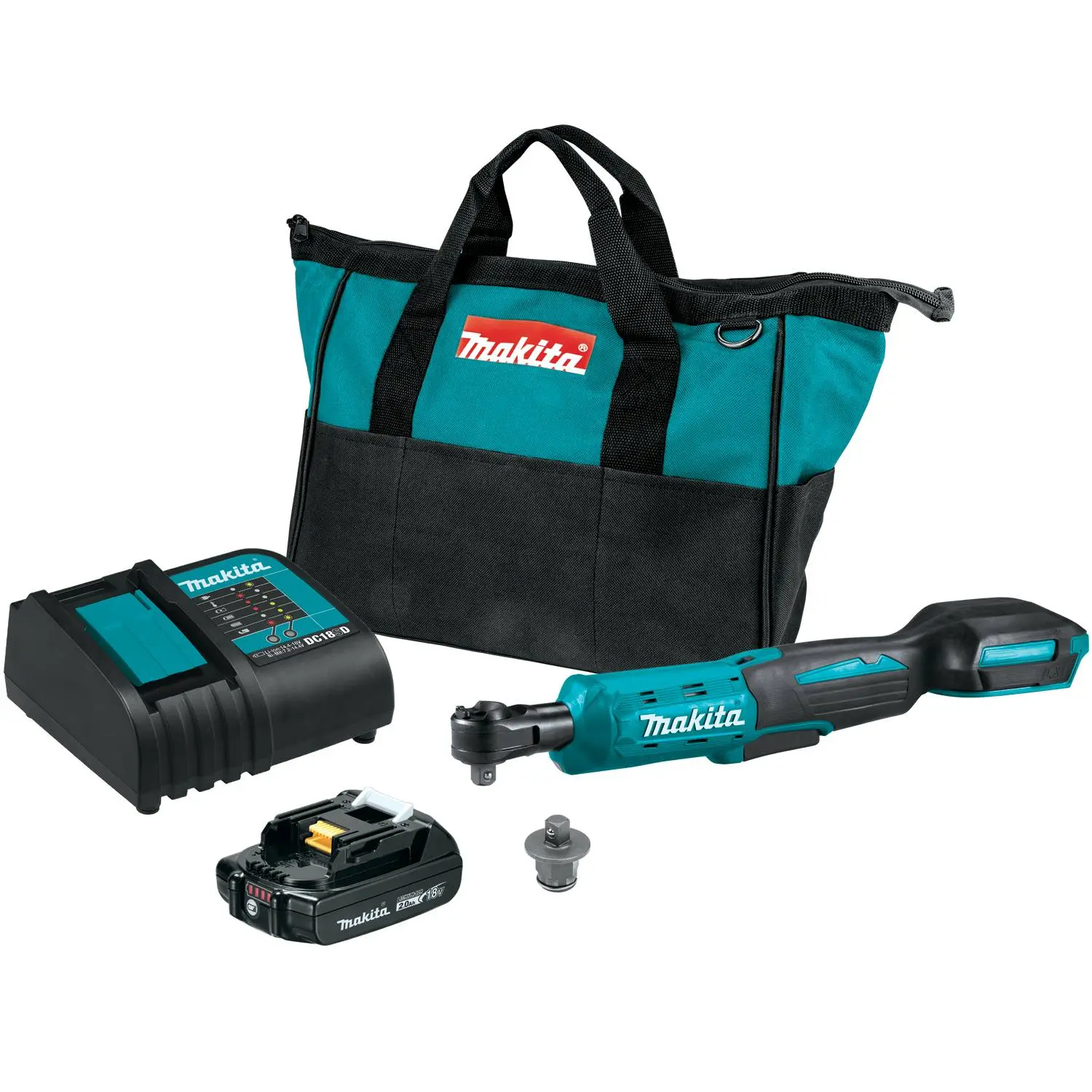
A cordless ratchet trades torque for speed and size, so the right one depends on whether you mostly run fasteners down or fight stubborn ones. Three current models show the range: the Makita XRW01 at up to 800 RPM and 35 ft-lbs, the Milwaukee M12 FUEL 2567-20 at up to 450 RPM and 35 ft-lbs, and the DeWalt DCF520B at up to 450 RPM and 50 ft-lbs, all according to each maker’s own page. On November 14, US stores listed them at roughly $200 to $361, with only the Makita price including a battery and charger.
None of these is a new launch. The newest, the DCF520B, was announced by DEWALT on February 12, 2026 and went on sale in March, so this is a buying guide, not news. Every test comment below belongs to the outlet that made it, and Torque Digest did not test these tools.
Does torque or speed matter more in a cordless ratchet?
Speed matters more for the long run down of a bolt, and torque matters for the last snug turn or a tight start. A ratchet is built for access and pace; for really stuck fasteners most people still reach for an impact wrench or a breaker bar, then finish with the ratchet.
That is why the Makita stands out on paper. At up to 800 RPM it is close to twice the speed of the other two, but it is also the only one of the three with a brushed motor, and Makita lists it at 14-1/2 in long.
How do the three compare on paper?
Here is what each maker’s page lists:
| Model | Platform | Torque | Speed | Motor | Sold as |
|---|---|---|---|---|---|
| Makita XRW01SR1 | 18V LXT | 35 ft-lbs | 0 to 800 RPM | Brushed | Kit with 2.0Ah battery, charger, bag |
| Milwaukee 2567-20 | M12 | Up to 35 ft-lbs | Up to 450 RPM | Brushless | Tool only |
| DeWalt DCF520B | 20V MAX XR | Up to 50 ft-lbs | Up to 450 RPM | Brushless | Tool only |
Makita lists a weight of 2.7 lbs with the battery. Milwaukee lists a 0.75 in head profile and calls it compact for tight spaces. DeWalt’s page gives no length, weight or head size for the DCF520B, but calls it its highest speed 20V MAX ratchet and lists a sealed head, trigger lock, LED and three anvils.
What do they cost to start with?
Prices change, so treat these as a snapshot from November 14:
| Model | Store | Listed price | Battery and charger |
|---|---|---|---|
| Makita XRW01SR1 kit | Acme Tools | $361.25 | Included |
| Milwaukee 2567-20 | The Power Tool Store | $199.99 | Not included |
| DeWalt DCF520B | Acme Tools | US$279.00 | Not included |
The bare tools look cheaper, but a first time buyer also needs a battery and charger on that platform. If you already own M12 or 20V MAX packs, the bare tool is the better value; if you own nothing, the Makita kit is the only complete package here.
What do outlets that tested them say?
Read the model numbers carefully, because the published tests did not always cover these exact tools.
Bob Vila’s testers worked in a 4x4 engine bay and named the Makita 18V LXT kit best overall. The tester said its speed set it apart, praised the electric brake and LED, and found the direction switch a little wonky, with a risk of catching on wires or hoses. Bob Vila’s Milwaukee pick was the older M12 2457-21 kit at 250 RPM, not the 2567-20, and the tester found that tool’s speed underwhelming.
The Drive named the Milwaukee M12 FUEL high speed ratchet an honorable mention, noted its 35 ft-lbs is strong for a 12-volt tool, and said the bare tool cost more than a Ridgid tool and battery combo. Its premium pick was a DeWalt XR sealed head ratchet, but the linked model was the older DCF510B, not the DCF520B. That test tells you about DeWalt’s sealed head design, not the newer tool’s speed.
Which has more torque if I need it?
The DeWalt, at up to 50 ft-lbs. If torque matters more than speed, other models go further: DeWalt lists 70 ft-lbs for the Atomic DCF513B 3/8 in ratchet, and Bob Vila lists 55 ft-lbs for the RIDGID R866021B, which it described as powerful but long, with a large head. The same February release added the DeWalt ATOMIC DCF514B 1/4 in ratchet at up to 45 ft-lbs and 250 RPM, plus an extended reach version, for 1/4 in work.
What should you check before buying?
- Battery platform: the Makita kit includes an 18V LXT 2.0Ah battery and charger; DeWalt says batteries for the DCF520B are sold separately; the Milwaukee 2567-20 page shows a bare tool.
- Drive and anvils: Makita ships 3/8 in and 1/4 in square drive anvils. The DCF520B includes 3/8 in and 1/4 in square drive anvils plus a 1/4 in low profile hex anvil. The Milwaukee 2567-20 is 3/8 in only.
- Warranty: Makita lists a 3-year limited warranty on the tool, battery and charger. DeWalt lists 3 years limited, 1 year free service and a 90-day satisfaction guarantee. Milwaukee’s page shows a 5-year tool warranty logo, and The Drive also cites 5 years.
- Size: if the job is behind an engine or under a sink, the 0.75 in Milwaukee head is the only head height published here.
Who it suits
- Professional mechanic or technician: the Milwaukee 2567-20 for tight spaces and quick run downs. Check you have M12 packs, and keep an impact wrench nearby, since 35 ft-lbs will not break bolts loose.
- Home mechanic on a first purchase: the Makita kit arrives ready to work and is the fastest on paper. Check its length and the switch placement around hoses.
- Someone already on 20V MAX: the DeWalt DCF520B gives the most torque of the three and a sealed head. Confirm you have batteries, and note that independent test data on this exact model is still thin.
- Someone already on M12 or 18V LXT: match the platform before anything else, because a compatible battery is the real saving.
- Gift buyer: choose the kit if you do not know which batteries the person owns.
Before you buy, open the maker page for the exact model number, confirm whether the listing is a kit or a bare tool, and compare the price against the snapshot above closer to Black Friday on November 27.