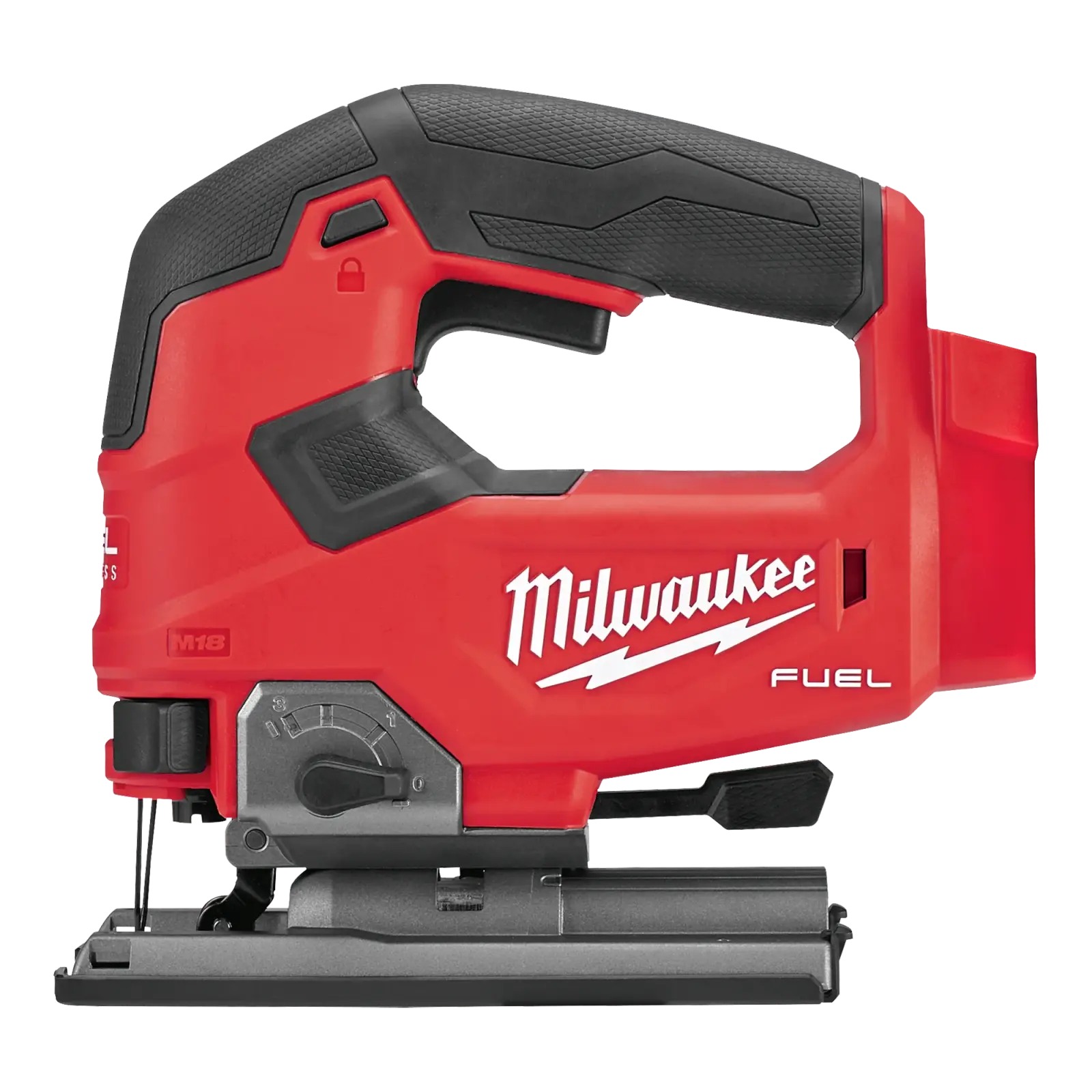
For most buyers the right cordless jig saw is the one that runs on batteries they already own. Among pro saws, Pro Tool Reviews ranks the DEWALT DCS334 best overall and the Milwaukee M18 FUEL 2737 fastest, with the Makita XVJ02 and Hilti SJD 6-22 winning on control and low vibration. None of these saws is new, so this is a buying guide rather than launch news.
Which cordless jig saw did the reviewers rank highest?
Pro Tool Reviews names the DEWALT 20V MAX XR DCS334 best overall and the Milwaukee M18 FUEL 2737 best for cutting speed in its cordless jigsaw roundup. The Makita 18V LXT jig saw takes its accuracy and control award, and the Hilti Nuron SJD 6-22 its vibration control award.
The roundup is not freshly dated. It carries no publish date and refers to 2023 promotions, so read it as a long term ranking. Its verdicts are written judgements, not published cut times, and Torque Digest has not tested any of these saws.
One naming note: the roundup heads the Makita pick as XJT02 but calls it XVJ02 in the text. Makita USA lists the 18V LXT brushless jig saw as the XVJ02Z, so search for that model number.
Why did each saw win its category?
Pro Tool Reviews credits the DEWALT with low vibration, minimal blade deflection on tough cuts, a tool free bevel and a blade eject lever. It also notes that its cutting speed trails the fastest rivals and that it has no vacuum port or lock-on button.
The Milwaukee was the fastest cutter in the roundup and adds a dust port and blade eject. Its orbital action speeds cuts but leaves a rougher edge, and the reviewers found no lock-on button and no speed dial. Milwaukee rates it at up to 105 linear feet of 3/4” laminated particle board per charge with an XC5.0 battery.
The Makita earned its award with a soft start that steadies the start of a cut, a six step speed dial and a lock-on button. Its drawback, per the roundup, is price.
The Hilti stood out for vibration. In a separate review, Pro Tool Reviews said Hilti tops every cordless model it had used for vibration control, and Tool Box Buzz found it kept the blade square through curves in 3/4” plywood. Both outlets flag the same weak spot: the bevel needs a hex wrench, with nowhere to store it on the saw.
How do the specs compare?
The table combines figures from Makita USA, Milwaukee, Hilti, DEWALT Canada, Toolnut, The Power Tool Store, Tool Box Buzz and, for the Bosch, Pro Tool Reviews. Weights are tool only unless noted, and makers measure them differently.
| Model | Platform | Top speed | Stroke | Orbital settings | Weight | Bevel |
|---|---|---|---|---|---|---|
| DEWALT DCS334B | 20V MAX XR | 3,200 SPM | 1 in. | 4 | 5.2 lbs | detents at 0, 15, 30, stop at 45 degrees |
| Milwaukee 2737-20 | M18 FUEL | 3,500 SPM | 1 in. | 4 | 4.85 lbs | stops at 0, 15, 30, 45 degrees |
| Makita XVJ02Z | 18V LXT | 3,500 SPM | 1” | 3 plus straight | 5.8 lbs with battery | 0 to 45 degrees, both sides |
| Hilti SJD 6-22 | Nuron 22V | 3,000 SPM | 1-3/32” | 3 | 4.9 lb | 0 to 45 degrees, wrench needed |
| Bosch GST18V-50N | 18V | 3,500 SPM | not checked | 4 | not checked | not checked |
The spread in stroke length and speed is small. The differences that change daily use are the bevel mechanism, whether there is a speed dial and lock-on button, and how the saw balances with your usual battery. Tool Box Buzz found the Hilti rear heavy with a large pack fitted.
Pro Tool Reviews also notes that the Hilti SJD 6-22 uses a brushed motor, while the DEWALT, Milwaukee and Makita are brushless.
How much do they cost?
Prices vary widely by store and date, so treat these as reference points. Pro Tool Reviews lists the DEWALT at $199 bare and $349 as a kit with a 5.0Ah battery, the Milwaukee at $199 bare and $299 as a kit, the Makita at $329 bare and the Hilti at $264 bare. On November 14, Toolnut listed the DCS334B bare tool at $239.00 USD and showed it sold out.
The Hilti shows how much prices drift: Pro Tool Reviews quotes $264 in the roundup and $269 in its review, while Tool Box Buzz gives $239 and $279 in different parts of its page. If you are new to Nuron, add a battery: Pro Tool Reviews lists the 4.0Ah B 22-85 it recommends at $136.00.
At the budget end, Pro Tool Reviews lists the Bosch GST18V-50N at $149 bare, the Skil PWRCore 20 JS820202 at $149 with a 2.0Ah battery and charger, and the brushed HART HPJS01 at $64 bare or $89 with a 1.5Ah battery.
What are the trade offs?
The roundup marks the DEWALT and Milwaukee down for having no lock-on button, while the Makita has one along with a speed dial. The Milwaukee is fast but rougher in orbital mode, the DEWALT is smooth but slower, and the Hilti is the smoothest but needs a wrench for bevels and means buying into Nuron if you are not already on it.
What these sources do not settle: long term durability, and how each saw handles metal and laminate, which none of the roundups measured.
Who it suits
- Pro on DEWALT 20V MAX: the DCS334B adds no new battery type and won best overall. Check that you can live without a lock-on button and a vacuum port.
- Pro on Milwaukee M18: the 2737-20 cut fastest in the roundup and has a dust port. Check edge quality in orbital mode on finish work, and buy the kit only if you need another pack.
- Finish carpenter or cabinet maker on Makita: the XVJ02Z has the soft start, speed dial and lock-on button. Check the 5.8 lbs working weight and the price.
- Hilti Nuron user or vibration sensitive user: the SJD 6-22 is the smoothest according to both reviews. Check that you can keep the hex wrench handy for bevel changes.
- Occasional DIYer or first time buyer: the Skil kit or the Bosch bare tool cost far less. Check bevel adjustment and blade change, which matter more than top speed.
- Crew buyer: standardise on the platform your crew already charges, since a second battery family costs more than the saw.
What should you check before you order?
Open the official page for the saw on your platform, confirm whether the listed price is bare or kit, and check stock, since Toolnut showed the DCS334B sold out on November 14. Budget for a pack of general purpose and fine tooth blades, and check the shank type: the DEWALT and Milwaukee pages and both Hilti reviews specify T-shank blades.