A cordless combo kit is two or more tools sold with batteries, a charger and a bag, and three lines on the listing decide most of its value: the battery size in Ah, the motor type and the exact tool list. This guide reads three maker spec pages side by side and adds what Pro Tool Reviews has published, so a Black Friday listing is easier to judge. Torque Digest did not test any of these kits.
What does a combo kit actually contain?
Most two tool kits pair a drill driver (or hammer drill) with a 1/4-in impact driver, plus two batteries, one charger and a bag or case. The details vary a lot from one kit to the next, and the model number on the listing is the only reliable way to tell them apart.
Here is how three kits compare, using each maker’s own page:
| Kit | Tools | Batteries | Motor | Warranty |
|---|---|---|---|---|
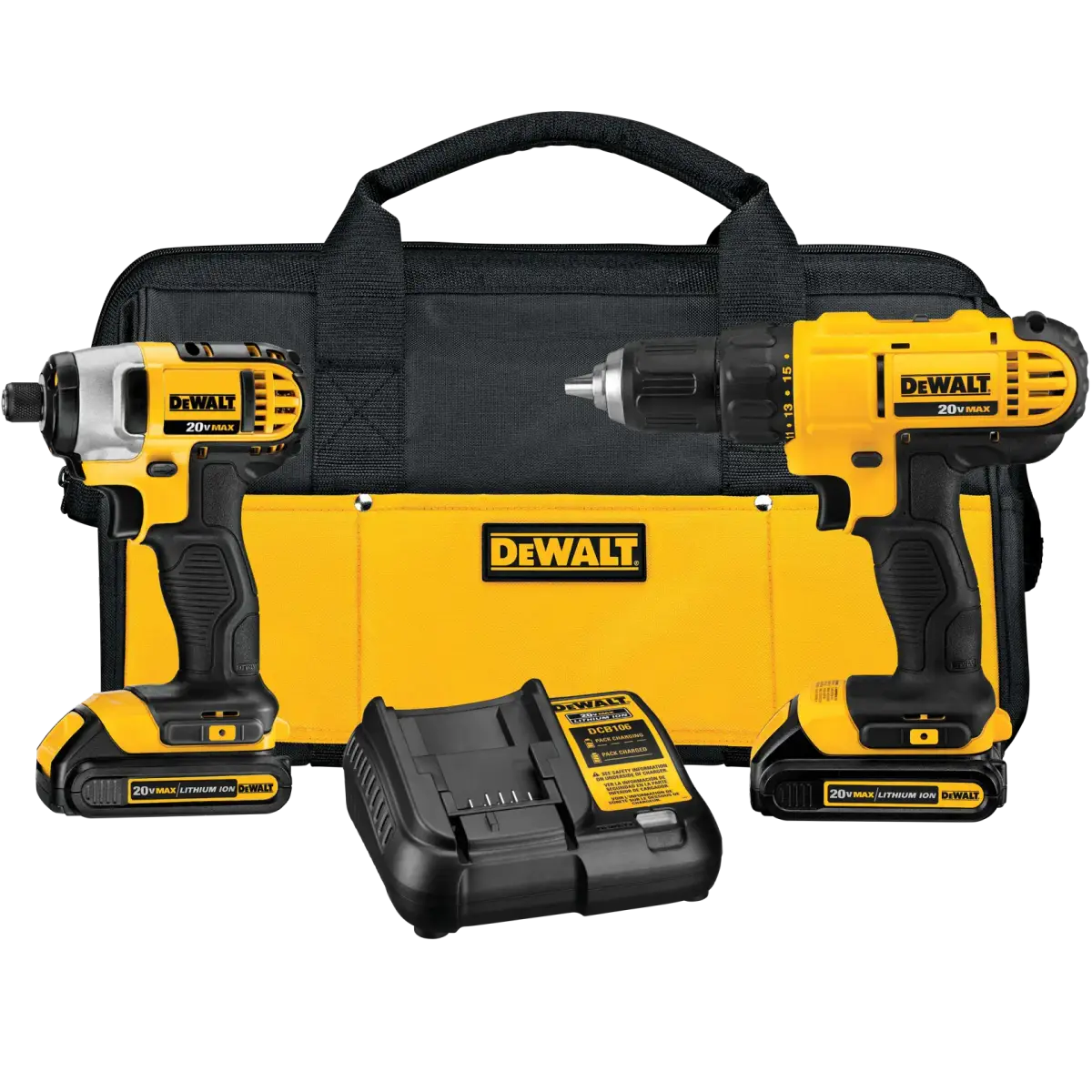
| DEWALT DCK240C2 | DCD771 1/2-in drill/driver, DCF885 1/4-in impact driver | Two 1.3 Ah | DEWALT says “high performance motor” and does not say brushless | 3-year limited |
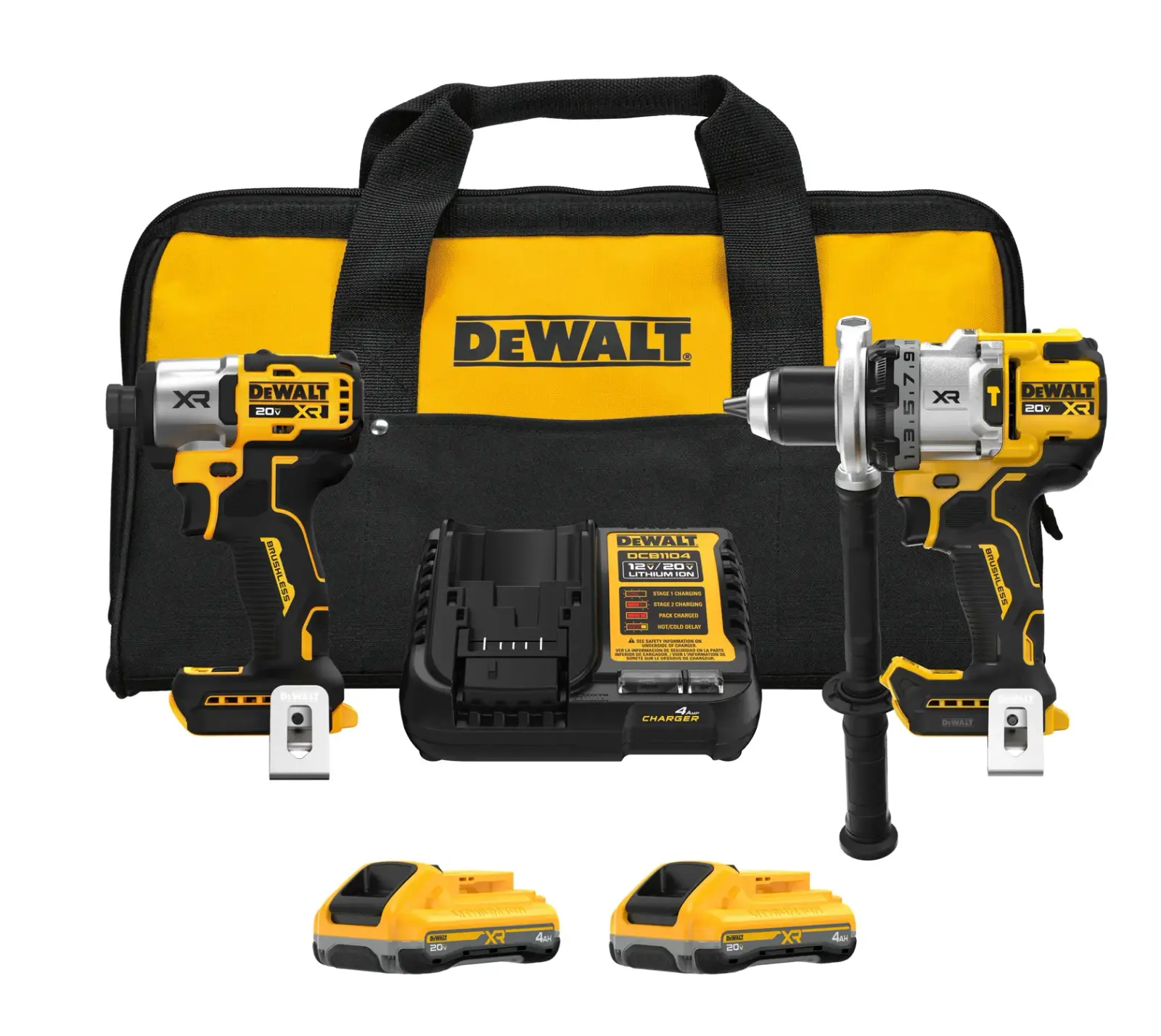
| DEWALT DCK2101QQ2 | DCD1007 hammer drill, DCF845 impact driver | Two 4Ah DCB2104 | Brushless on both | 3-year limited |
| Milwaukee 3697-22 | 2904-20 hammer drill/driver, 2953-20 impact driver | Two XC5.0 packs, 5.0Ah | POWERSTATE brushless | Not stated on the page |
The DCK240C2 page lists a contractor bag. The DCK2101QQ2 page lists a side handle, two belt hooks and a contractor bag. Milwaukee lists a side handle, two belt clips and a blow molded case, plus a charger that handles both M18 and M12 packs.
What does the Ah number on the box mean?
Ah, or amp hours, is the battery’s capacity rating, and within one platform a bigger number generally means more work per charge. The same two tool pair can arrive with 1.3 Ah packs in one kit and 4Ah or 5.0Ah packs in another, so the battery line often explains the gap between a cheap kit and a dearer one.
That is why the DCK240C2 and DCK2101QQ2 are not interchangeable choices even though both are DEWALT 20V MAX kits. One ships with two 1.3 Ah packs, the other with two 4Ah packs. DEWALT’s own page also notes that 20V is the maximum initial battery voltage and 18V is the nominal voltage, which is why the same platform is sold as 18V by some makers and 20V MAX by others.
Does brushless matter in a kit?
Brushless motors have no carbon brushes to wear out, and Pro Tool Reviews says they run cooler, last longer and can extend runtime “as much as 50% over brushed motors”. The same outlet says every kit in its own buying guide uses brushless tools.
Two practical points follow. First, check the listing rather than assuming: the DEWALT page for the DCK240C2 does not say whether its tools are brushed or brushless, while the DCK2101QQ2 and Milwaukee 3697-22 pages both name brushless motors. Second, a brushless label says nothing on its own about size, weight or price, so read the rest of the table too.
How should I compare torque and speed figures?
Compare them within one maker’s page, not across makers. DEWALT lists 2,100 in-lbs max brake torque for the DCD1007 hammer drill and 1,825 in-lbs for the DCF845 impact driver, with up to 3,400 RPM no-load on the impact driver. Milwaukee lists 2000 in-lbs among the kit features without naming which tool it belongs to, and up to 3900 RPM for the impact driver.
The DCK240C2 page gives a different kind of number: 300 UWO for the drill, which is a power rating and not torque. Its drill has a two-speed gearbox covering 0 to 450 RPM and 0 to 1,500 RPM. Because makers state torque on different bases and not every page names the tool, a head-to-head ranking from spec sheets alone would mislead. Published tests are the better tiebreaker, and Pro Tool Reviews says its kit rankings come from head-to-head testing on a drill, impact driver, circular saw and reciprocating saw whenever possible.
Is a kit better than buying bare tools?
A kit usually wins when you own no batteries yet, because the batteries and charger are the part you cannot skip. A bare tool wins when you already own packs on the same platform and only need one more tool. Pro Tool Reviews notes that sales sometimes include discounts and even free bare tools, so a bundle can change the maths.
Check what the bundle adds. A free bare tool is only useful if it is on your platform and you would have bought it anyway. A larger kit, such as the 6-tool and 10-Tool kits Pro Tool Reviews lists, adds saws and lights, but each tool may share the same two batteries.
What should I check before buying on sale?
- The model number in the listing, matched against the maker’s page. Several kits look alike.
- The battery size in Ah, and how many packs are included.
- Whether the motor is stated as brushless, as the maker’s own page words it.
- The charger and what it fits. Milwaukee’s charger covers M18 and M12 packs.
- The warranty. DEWALT states 3-year limited for both kits above, and Milwaukee’s page links to a warranty page instead of stating terms.
- The price in the currency and country of the store you are using, compared with the maker’s list price rather than a crossed out store price.
Who it suits
- First time home owner: a two tool kit with two packs covers hanging shelves and assembly. Prioritise the battery line and the bag over extras.
- DIYer who builds a lot: look for the hammer drill and brushless labels, and the larger Ah packs.
- Tradesperson adding to a platform: consider a bare tool or a kit with a free bare tool, if the platform matches your existing batteries.
- Gift buyer: match the exact model number, and check that the bag and charger are in the box.
- Occasional user on a budget: a kit with smaller packs can be enough, as long as the listing is honest about the motor type.
Before the sales start, open the maker pages for the kits you are watching and write down the model number, Ah and motor type. Then compare each Black Friday listing against that list.