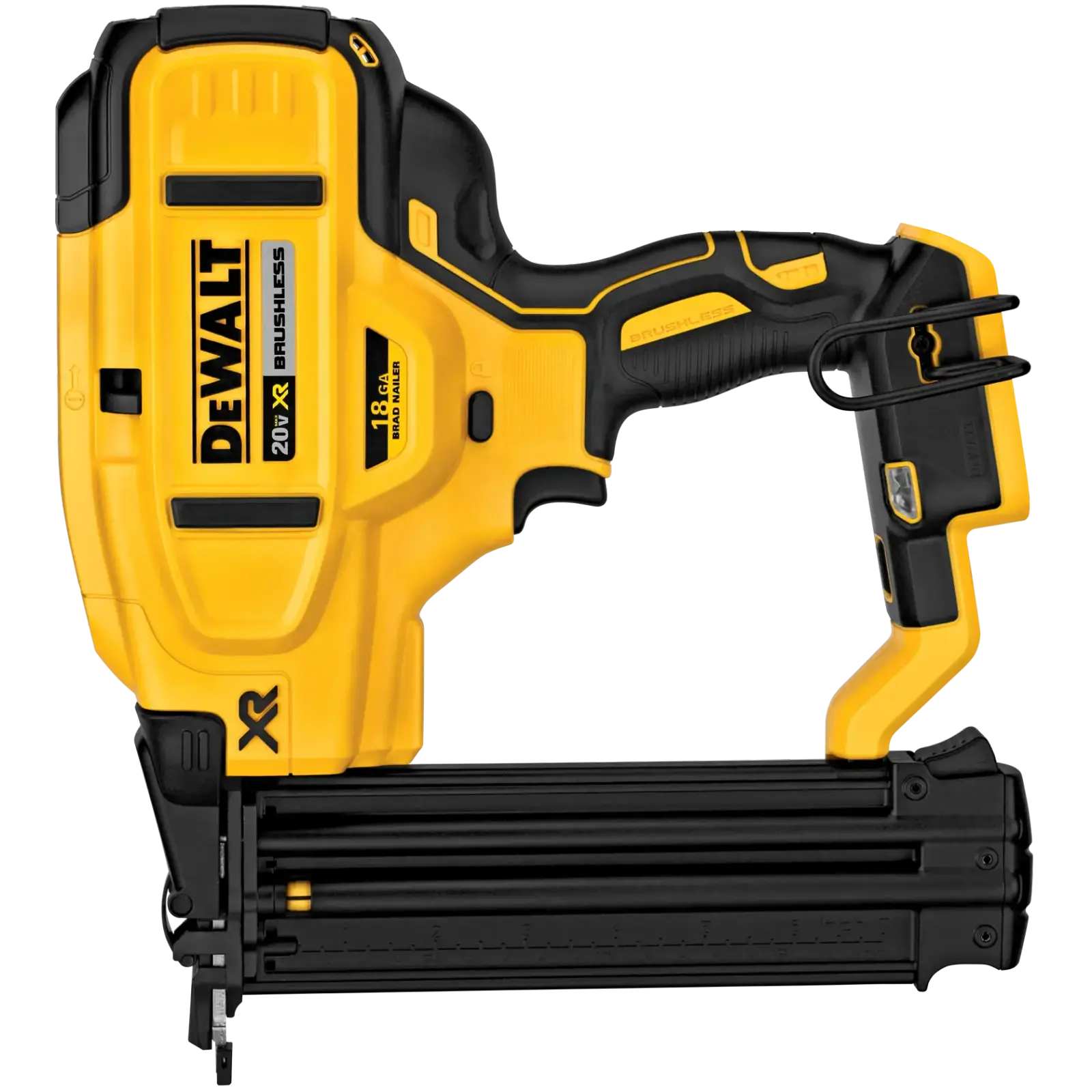
Choosing between an 18-gauge brad nailer and a 16-gauge finish nailer comes down to balancing holding strength against visible hole size when installing trim, moulding, and custom cabinetry.
Woodworkers and finish carpenters routinely compare tools like the DEWALT DCN680 18-gauge brad nailer and the DEWALT DCN660 16-gauge finish nailer. Both tools operate on the 20V MAX cordless platform, but their wire diameter and mechanical holding capacity serve distinctly different interior carpentry tasks.
What is the difference in wire gauge and holding strength?
The primary distinction between the two tools lies in wire thickness and mechanical resistance.
An 18-gauge nail has a nominal wire shank diameter of 0.0475 inch. In contrast, a 16-gauge nail measures 0.0625 inch in shank thickness. Because of this thicker cross-section, a 16-gauge fastener provides roughly double the holding strength of a standard 18-gauge brad.
The DEWALT DCN680 drives 18-gauge fasteners from 5/8 inch to 2-1/8 inches in length, or 16 mm to 54 mm. It features a straight 0 degree magazine with a capacity of 110 nails and weighs 5.3 lbs without a battery.
By comparison, 16-gauge tools such as the DCN660 drive heavier fasteners measuring 1-1/4 inches to 2-1/2 inches, or 32 mm to 64 mm.
Which nailer leaves smaller holes in painted or stained trim?
An 18-gauge brad nailer leaves a substantially smaller entry hole in the wood surface.
Because 18-gauge brads lack large heads, they penetrate clean surfaces with tiny rectangular slits that frequently require only a quick dab of wood filler or color-matched putty. On pre-finished shoe moulding or delicate quarter-round, the entry point is barely noticeable once completed.
A 16-gauge finish nail features a slightly broader head designed to anchor thicker wood stock firmly into wall studs. This leaves a noticeable hole that must be filled, dried, and sanded flush prior to painting or applying clear protective coats.
When should you choose an 18-gauge brad nailer?
An 18-gauge tool like the DCN680 excels on fragile trim pieces where a heavier fastener would split thin grain.
Key applications for 18-gauge brads include shoe moulding, cove moulding, picture framing, thin plywood cabinet backing, and small decorative stop beads on windows. The lighter wire flexes slightly under natural seasonal wood movement and prevents delicate hardwood profiles from fracturing during installation.
When should you choose a 16-gauge finish nailer?
A 16-gauge tool provides the sheer holding power necessary to secure structural interior woodwork.
Contractors rely on 16-gauge finish nailers for exterior door jambs, interior door casings, window frames, tall baseboards, stair risers, and heavy crown moulding. These larger trim elements require fasteners capable of penetrating drywall and anchoring securely into framing lumber without pulling loose over time.
Who it suits
- Professional tradesperson: Finish carpenters generally keep both tools on their work vehicle, using 16-gauge fasteners to set heavy door casings and baseboards, followed by 18-gauge brads for delicate shoe moulding and decorative details.
- Serious DIYer: An 18-gauge cordless brad nailer is typically the most versatile first purchase, handling furniture builds, accent walls, and general home trim tasks.
- First time buyer: A cordless 18-gauge tool eliminates the hassle of air hoses and compressors while offering enough holding strength for typical craft and repair projects.
- Budget homeowner: If purchasing only one nailer to handle small baseboard repairs and decorative trim, the smaller hole size of an 18-gauge tool simplifies finishing.
- Existing platform owner: Trades with DEWALT 20V batteries can purchase bare tools like the DCN680 directly to expand their finish carpentry kit without buying duplicate chargers.
Buyers can review current nailer pricing and accessory options on manufacturer and distributor product pages.